
Reviewed · MUSEUMS
Dubai: Al Shindagha Museum Entry Ticket
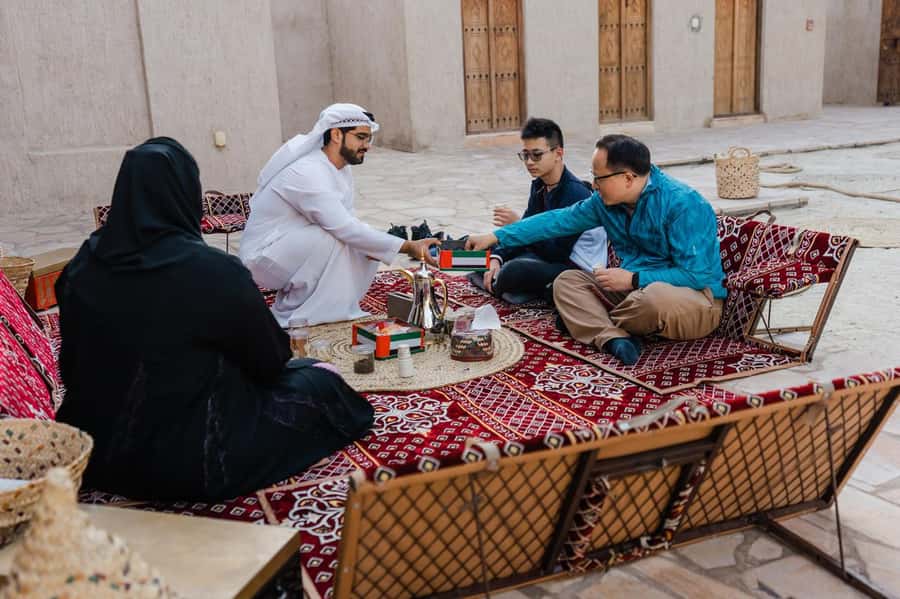
Al Shindagha Museum is not a single quiet gallery. It is a broad heritage district beside Dubai Creek, with the former Sheikh Saeed Al Maktoum Residence and more than 20 additional houses covering the story of Dubai and Emirati life. You move from perfume and jewelry to trade, food, faith, navigation, and the city’s rise into the modern age.
I like the way the museum connects everyday objects to big changes in Dubai. I also like its use of interactive and multisensory displays, including virtual reality, which gives younger visitors more to do than simply read wall panels. The main consideration is time: this is a large complex, so a quick one-hour visit will only scratch the surface.
Key points
- Sheikh Saeed Al Maktoum Residence: Visit the former home of Dubai’s ruler and Al Maktoum family residence until 1958.
- A museum spread across heritage houses: Explore exhibits on Dubai Creek, trade, crafts, food, faith, the sea, and the city’s growth.
- Interactive Emirati storytelling: Expect virtual reality, hands-on displays, workshops, tours, and other modern presentation methods.
- A full-day ticket: Your admission is valid for one day, giving you time to set your own pace.
- Five guide languages: Guided support is available in English, Arabic, Chinese, Russian, and French.
- Accessible planning: Wheelchair access is available, and cancellation is allowed up to 24 hours before the visit for a full refund.
Al Shindagha Museum and the story of Dubai Creek
Dubai Creek is the right place for this museum. The waterway shaped Dubai’s early life, linking the settlement to fishing, trade, travel, and contact with the wider region. At Al Shindagha, you are not looking at the city’s past from a distance. You are walking through the historic neighborhood where that story is presented.
The museum explains how Dubai grew from a creek-side community into the modern UAE city you see today. Its focus is wider than rulers and grand buildings. You also get the human side of progress: work, family life, food, faith, health, clothing, seafaring, and the skills people used to adapt to difficult conditions.
That broad approach is one of the museum’s best qualities. You can learn about Dubai without treating history as a list of dates. A display on traditional crafts, for example, helps show how useful objects were made. A section on trade and journeys points to the connections that helped Dubai grow.
The museum describes itself as a collection of 21 houses, while other details refer to 22 unique exhibit houses. The exact count appears to depend on how the buildings and Visitor Center are counted. Either way, plan for a substantial museum district, not a single compact exhibition room.
More museums and galleries in Dubai:
- Dubai: Museum of the Future Admission Ticket
★ 4.3 · 21,464 reviews - Dubai: Old Town, Creek, Museums, Souks, & Street Food Tour
★ 4.8 · 10,816 reviews - From Dubai: Abu Dhabi Grand Mosque & Louvre Museum Full-Day
★ 4.8 · 6,227 reviews
Starting at the Visitor Center
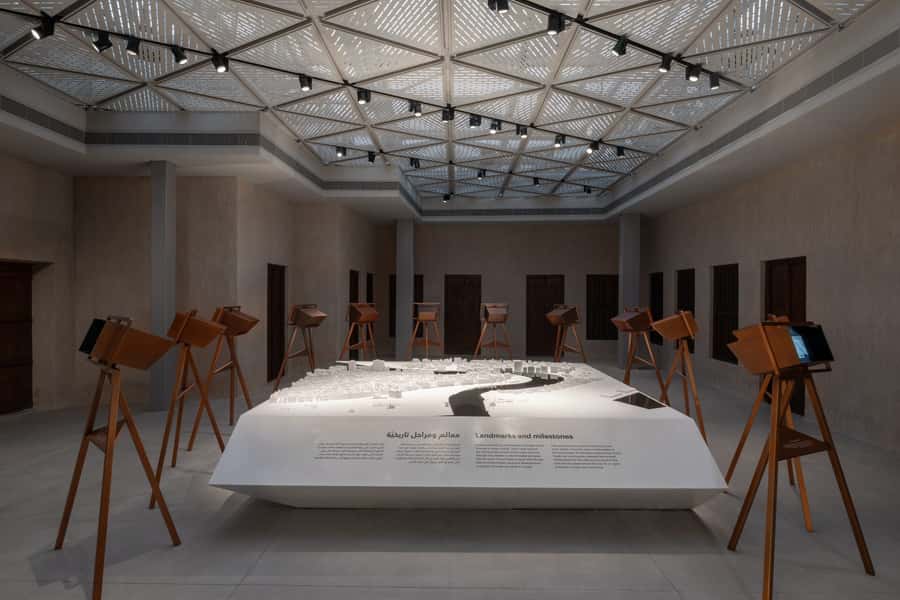
Begin at the Visitor Center. It provides the best introduction to the site and helps you understand how the houses fit together. Since the museum covers many subjects, taking a few minutes to get oriented can save you from wandering past exhibits you would have liked to see.
The Visitor Center is also part of the museum experience rather than just a ticket checkpoint. The overall presentation uses modern technology, interactive installations, and sensory elements to make the material easier to follow. This matters at a heritage site because the subject can otherwise feel distant, especially for children or anyone unfamiliar with Emirati culture.
You should not expect every house to feel identical. Some focus on objects and traditions. Others place more weight on visual storytelling, digital displays, or reconstructed settings. Give yourself permission to spend more time in the subjects that catch your attention.
The ticket is valid for one day, so you do not need to race through the complex. That is useful in Dubai, where heat and long walking periods can affect your energy. A slower visit also lets you pause between houses instead of treating the museum like a checklist.
Inside Sheikh Saeed Al Maktoum Residence
The former Sheikh Saeed Al Maktoum Residence is one of the main reasons to visit. It was the home of the Al Maktoum family and of Sheikh Saeed Al Maktoum, who ruled Dubai until 1958. He was also the grandfather of Sheikh Mohammed bin Rashid.
This residence gives the museum a clear political and personal anchor. After seeing exhibits about work, trade, and domestic life, you can place Dubai’s leadership within the same historical setting. The building helps connect the story of the city to the family that guided it through an important period of change.
Do not treat the residence as the entire museum. It is an important stop, but the surrounding houses add the detail that makes the visit worthwhile. The residence tells you where the ruling family lived. The other exhibits help explain the society, economy, beliefs, and skills that supported Dubai’s growth.
The building also gives you a welcome change of pace from technology-heavy displays. Some people will prefer the direct feeling of moving through a historic residence. Others will find the newer interactive houses more engaging. The mix works well because the museum does not rely on one method of storytelling.
From perfume and jewelry to traditional crafts
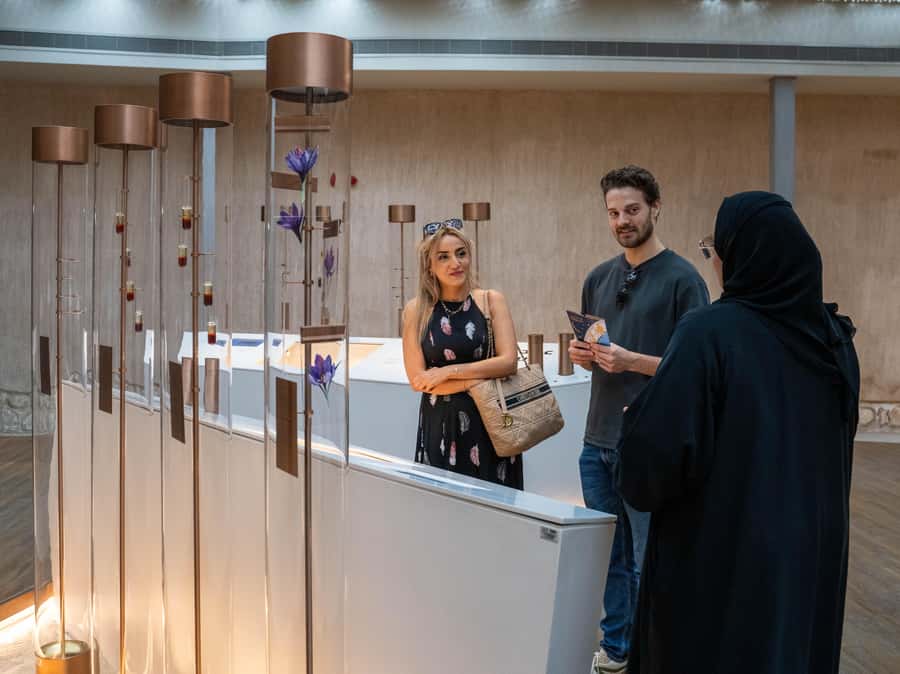
The Perfume House and Traditional Jewelry exhibit bring the museum down to a personal scale. Perfume, adornment, and jewelry are not just decorative subjects. They show how identity, family traditions, presentation, and skilled work were part of daily life.
The Traditional Crafts house continues that theme with the making of useful and valued objects. These exhibits are especially good for you if you prefer practical cultural details over a broad timeline. They can help you notice the work behind items that might otherwise look simple.
Beauty and Adornment adds another angle. Together, these houses show how clothing, scent, jewelry, and personal style carried meaning. The museum’s strength here is the range of subjects. You are not limited to formal history, since ordinary routines receive attention too.
These rooms may not hold your attention as long as the residence or a major digital installation. That is a matter of taste, not a flaw. If you like design, material culture, or handmade work, plan extra time. If you are more interested in Dubai’s growth as a city, use these exhibits as short but useful stops.
A few more Dubai half-days to weigh up
- Dubai: Burj Khalifa Levels 124 & 125 Entry Ticket + Options
★ 4.3 · 90,891 reviews - Dubai: Desert Safari, Quad Bike, Camel Ride & Al Khayma Camp
★ 4.9 · 68,962 reviews - Dubai: Desert Safari, Quad Bike, Camel Ride and Sandboarding
★ 4.9 · 43,505 reviews - Dubai: Safari, Quad Bike, Camel Ride, and Buffet Dinner
★ 4.9 · 33,424 reviews
Trade, journeys, and the making of an emerging city
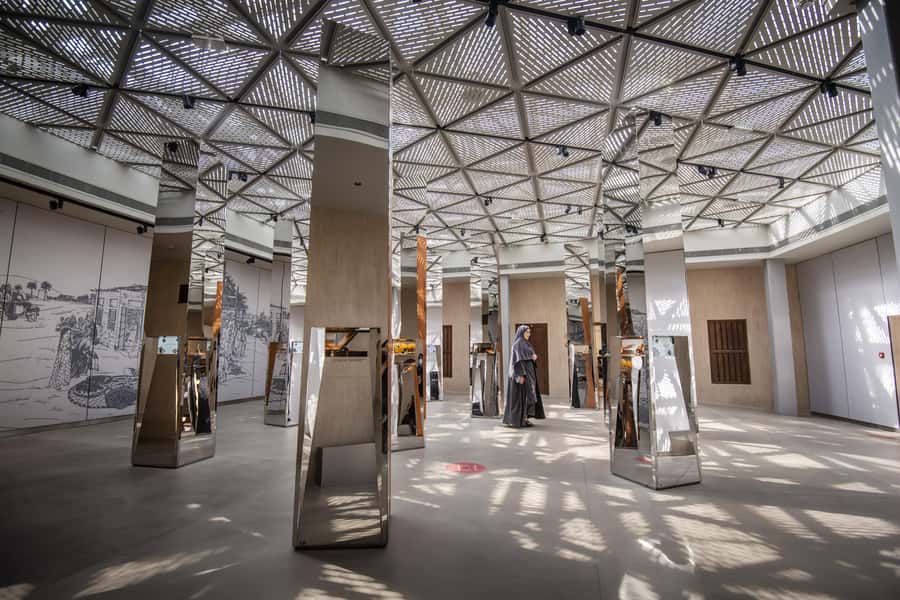
Trade and Journeys is central to understanding Dubai. The city’s story is tied to movement: people, goods, ideas, and connections across the water and beyond. This house gives context to the later story of prosperity and expansion.
The Emerging City exhibit then shifts the focus toward transformation. Dubai did not appear fully formed as the modern city you know today. Its development came through decisions, effort, adaptation, and changing links with the region and the wider world.
The value of placing these subjects in separate houses is that you can follow the story in stages. First, you see the importance of connection and exchange. Then, you see how a community developed into a more complex urban center.
This is also where the museum’s message about innovation and resilience becomes most visible. The presentation links the past to contemporary Emirati identity, rather than suggesting that tradition ended when modern Dubai arrived. You get a picture of a culture that changed while keeping older values and practices in view.
Land, water, and the sea
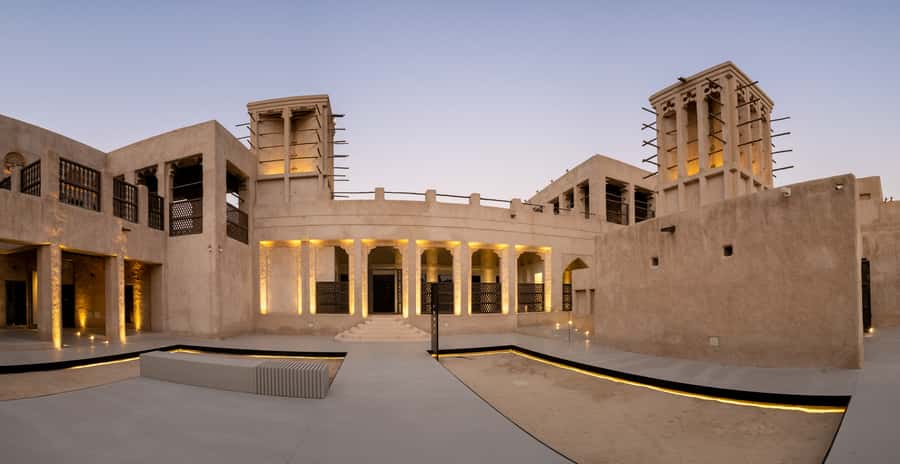
Life on Land, Water, Fauna and Flora, and Culture of the Sea broaden the museum beyond the city itself. These houses point to the natural setting and working environments that shaped life in the Emirates.
Culture of the Sea is particularly important in a creek-side museum. Water was not merely scenery. It affected transport, food, work, trade, and the rhythm of community life. The Navigation exhibit adds another practical layer, showing why knowledge of routes and movement mattered.
Life on Land provides a useful counterpoint. Together, the land and sea houses make it easier to understand that Emirati life developed through different environments, not only through urban commerce.
These sections can be rewarding if you like geography and working traditions. They may feel less immediately dramatic than a virtual reality display, but they supply the context that gives the rest of the museum meaning. I would not skip them just because they sound less flashy.
Food, healthcare, faith, and community
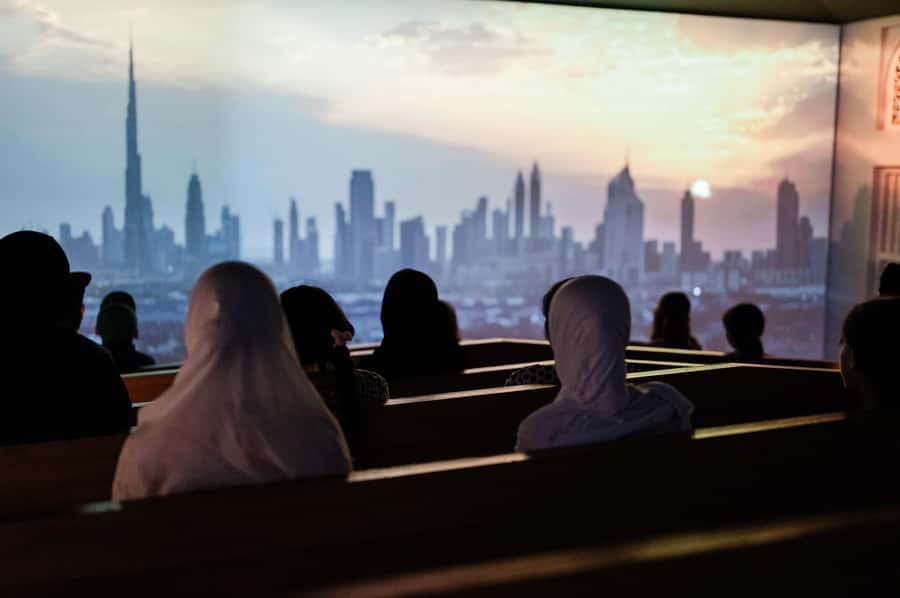
Traditional Food appears in the museum’s subject list, along with Traditional Healthcare, People and Faith, and Community Hall. Food is one of the simplest ways to connect history with your own life. It shows what people used, prepared, shared, and valued.
Traditional Healthcare offers a look at how communities cared for themselves before modern medical systems. The subject fits the museum’s wider interest in ingenuity and practical knowledge. It reminds you that progress is not only about buildings and technology. It also includes the methods people developed to solve daily problems.
People and Faith adds social and spiritual context. Community Hall then helps connect individual practices to shared life. These exhibits are useful because they prevent the museum from becoming only a story about economic growth.
If you are visiting with children, these subjects may work best when you relate them to familiar routines: eating, getting well, meeting neighbors, and practicing beliefs. The museum’s interactive approach should help, though the amount of reading and activity can vary from house to house.
Poetry, expressions, and the Children’s Pavilion
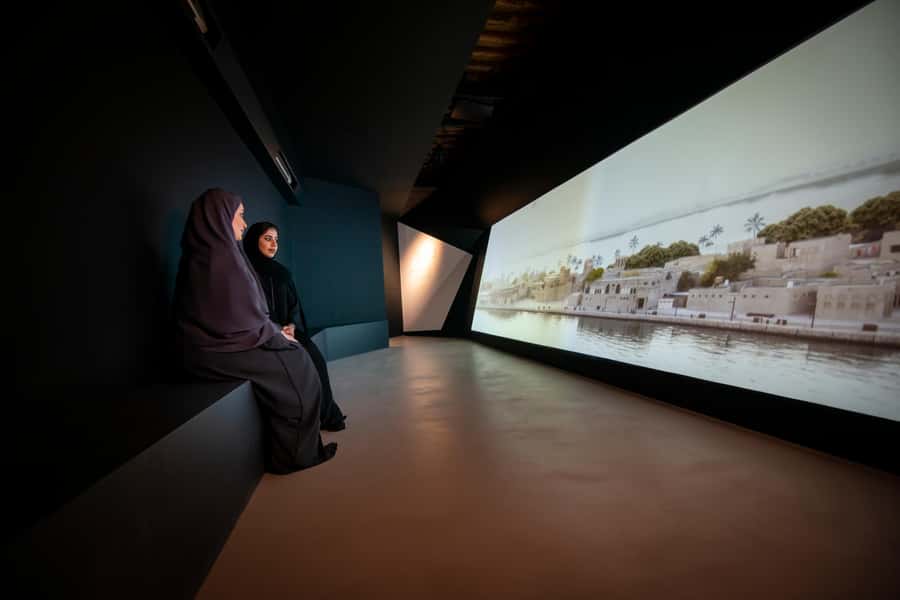
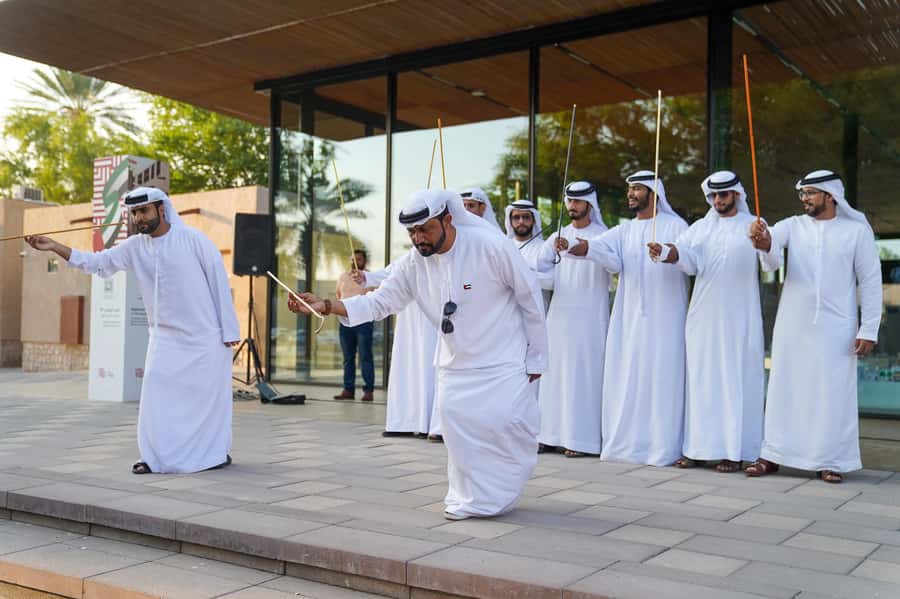
Expressions and Poetry show the importance of language, creativity, and oral culture. These areas help explain how identity is carried through words and ideas, not only through objects and buildings.
The Children’s Pavilion is a practical stop for families. A large museum can be tiring for young children, especially when houses cover many different subjects. A dedicated children’s area gives families a chance to keep the visit engaging rather than forcing everyone through every display at the same pace.
The museum also offers workshops, tours, and training as part of its wider program. The ticket information confirms the presence of these kinds of experiences, but it does not specify which sessions are included with standard entry or available on a particular day. If a workshop is important to your plans, check the current schedule before booking.
How the interactive design changes the visit
Al Shindagha uses virtual reality and other interactive installations to bring its material to life. That is more than a modern decoration. It changes how you process the information.
A conventional museum may ask you to stand in front of an object and read its label. Here, you might find a more active presentation, with visual and sensory elements that help connect an old practice to its setting. This is useful when the subject is unfamiliar or when you are visiting with children.
The approach will not suit everyone. If you prefer quiet rooms and long, detailed labels, the technology may sometimes feel like a distraction. If you want a museum that feels current and accessible, it is a strong feature.
The best strategy is to mix both styles. Take time with the displays that explain a subject well, then move on when an installation has made its point. You do not need to interact with every screen to get value from the museum.
Languages, access, and the one-day ticket
Guided support is available in English, Arabic, Chinese, Russian, and French. That gives you a useful choice if you want more explanation than the exhibits provide on their own. A guide can also help place individual houses within the larger story of Dubai and the UAE.
The information provided does not specify the tour length, group size, or whether a guide is included automatically with every entry ticket. Treat the ticket primarily as admission, and confirm the current guided-tour arrangements if personal commentary is essential to you.
Wheelchair access is available. Since the museum covers many houses, you may still want to confirm the current route and any building-specific access details before arrival, especially if you need a particular level of support.
The one-day validity is a real advantage. You can spread your visit across the day and take breaks rather than trying to complete the complex in one pass. Starting times depend on availability, so check the booking calendar when choosing your date.
At $13 per person, the ticket offers good value if you plan to see several houses. It is less compelling if you only want a brief look at the residence. The price makes the most sense for you if you treat Al Shindagha as a major cultural visit, not a quick photo stop.
Free cancellation up to 24 hours in advance and the option to reserve now and pay later also make the ticket easier to fit into a changing Dubai schedule. Those policies do not improve the exhibits themselves, but they reduce the risk of committing too early.
Who will get the most from Al Shindagha Museum
I would recommend this museum to you if you want more than skyscrapers, shopping, and polished modern attractions. It gives you a grounded look at the people, skills, beliefs, and economic connections behind Dubai’s growth.
Families should appreciate the Children’s Pavilion and interactive technology. The five available guide languages also make the visit practical for an international audience. Anyone interested in architecture, heritage, design, trade, food, or traditional work will find several houses worth a close look.
The museum is less suited to you if you want one short, tightly focused exhibit. Its size is both its main strength and its main challenge. You need time and some patience to move between subjects that vary in tone and presentation.
The strongest praised features are clear: the buildings and themes are well presented, and the museum feels modern and interactive. A perfect visit will depend partly on your pace and on how much of the complex you explore.
Should you book the Al Shindagha Museum ticket?
Book it if you want a substantial cultural stop beside Dubai Creek and you are willing to give it more than a rushed hour. The combination of Sheikh Saeed Al Maktoum Residence, heritage houses, modern installations, and practical subjects such as food, navigation, crafts, and healthcare gives you a fuller picture of Dubai than the usual city-center attractions.
Skip it only if your schedule is too tight to explore several houses or if you are looking for a single historic building rather than a large museum district. At $13, the value is strongest when you use the one-day validity and choose the exhibits that match your interests.
FAQ
Where is Al Shindagha Museum located?
Al Shindagha Museum is located beside Dubai Creek in the historic Al Shindagha neighborhood of Dubai, United Arab Emirates.
How long is the ticket valid?
The entry ticket is valid for one day. Starting times depend on availability.
What does the ticket include?
The ticket includes entry to Al Shindagha Museum. The museum includes the Sheikh Saeed Al Maktoum Residence, the Visitor Center, and a large collection of heritage houses and exhibits.
Which languages are available for guided support?
Guided support is available in English, Arabic, Chinese, Russian, and French.
Is Al Shindagha Museum wheelchair accessible?
Yes. The activity is listed as wheelchair accessible.
Can I cancel the booking?
Yes. You can cancel up to 24 hours in advance for a full refund. You can also reserve now and pay later.
Just added around Dubai
- Abu Dhabi City Tour with Ferrari Park★ 5.0 · 15 reviews
- Abu Dhabi City Tour with Ferrari world Full Day★ 4.5 · 11 reviews
- Abu Dhabi City Tour with Ferrari World Tickets★ 5.0 · 16 reviews
- Abu Dhabi City Tour with Buffet Lunch★ 4.5 · 17 reviews
- Abu Dhabi City Tour with Private Car★ 5.0 · 11 reviews
- Abu Dhabi City Tour with Desert Safari Adventure★ 5.0 · 8 reviews
- Exclusive Full-Day Abu Dhabi City Tour with Sheikh Zayed Mosque★ 5.0 · 38 reviews
- Abu Dhabi City Tour in a 4×4 Shared Vehicle★ 5.0 · 41 reviews
Museums, compared.

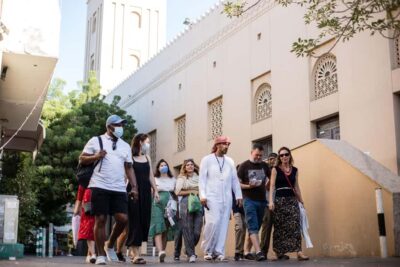
Old Town, Creek, Museums, Souks, & Street Food Tour
Read our review →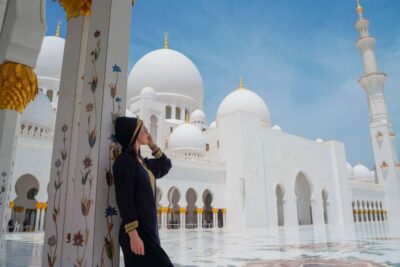
Abu Dhabi Grand Mosque & Louvre Museum Full-Day
Read our review →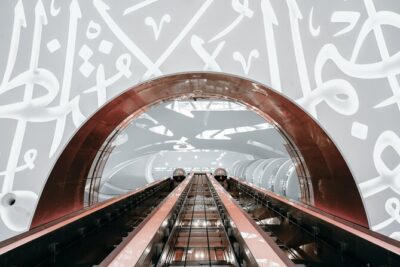


Abu Dhabi Day Tour with Grand Mosque & Louvre Museum
Read our review →
Future Museum, Burj Al Arab, and Dubai Frame Tour
Read our review →
Browse the lists this tour appears in