
Reviewed · DUBAI TOURS
Dubai: Cultural Lunch at The Sheikh Mohammed Center
The best part of this experience is the conversation. You sit on traditional floor cushions in a wind tower house in Al Fahidi Historic District, eat Emirati food, and ask direct questions about religion, family life, customs, clothing, and local values. This is less a sightseeing stop than a friendly cultural exchange over lunch.
I like the open question format, which lets you shape the meal around what you really want to understand. I also like the setting: a traditional house in the old Al Bastakiya trading village, far removed from Dubai’s glass towers. The main consideration is that some dishes may not match your expectation of traditional Arabic food. One meal has been described as more Indian in style, so come for the conversation as much as the menu.
Key points at a glance
- A meal inside a wind tower house: Eat in the courtyard of a traditional home in Al Fahidi Historic District.
- Questions are part of the program: The SMCCU encourages frank, respectful discussion about Emirati culture and Islam.
- Local tastes included: Expect Emirati dishes, Arabic coffee, tea, dates, and dessert.
- English-speaking hosts: Hosts such as Khaled, Nasser, Ruqaya, and Moeen Murad have led sessions praised for warmth, humor, and clear explanations.
- A useful first-day activity: The relaxed format can give you cultural context before you explore more of Dubai.
- Short and practical: The lunch lasts about 1.5 hours and costs $42 per person, with free cancellation up to 24 hours ahead.
Arriving at House 26 in Al Fahidi
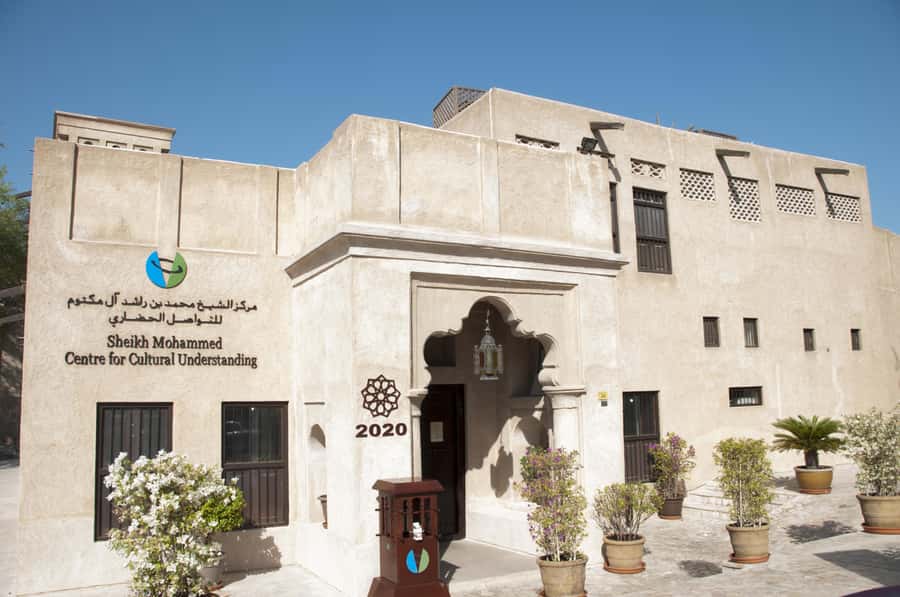
Your meeting point is House 26 on Al Musallah Road in the Al Fahidi Historic District, next to the Ruler’s Court. The venue sits in the old Al Bastakiya trading village, an area known for its traditional homes and wind towers.
That setting matters. Dubai is famous for new architecture, shopping malls, and grand hotels, but Al Fahidi gives you a look at the older town. The wind tower was designed to catch and direct air through the house, a clever feature from the days before air-conditioning. You do not just hear about old Dubai here. You sit inside one of its traditional house types.
Allow extra time to find the entrance. The lanes around Al Fahidi can be confusing, and construction has made some streets and paths harder to follow. A welcome sign at the wrong door has caused people to wait in the wrong place, so check the house number carefully and do not rely only on a sign. If you are coming straight from another attraction, leave a little breathing room.
The activity is listed as wheelchair accessible. Since the venue is in a historic district, you should still confirm the current meeting instructions when booking if you need specific access arrangements.
More lunch stops in Dubai:
- Dubai: Abu Dhabi Day-Trip Grand Mosque, Royal Palace & Lunch
★ 4.9 · 5,368 reviews - From Dubai: Abu Dhabi Essentials Tour with Optional Lunch
★ 4.1 · 1,332 reviews - Dubai: Abu Dhabi Trip with Lunch at Al Khayma Heritage Restaurant
★ 5.0 · 805 reviews
Settling onto floor cushions for lunch
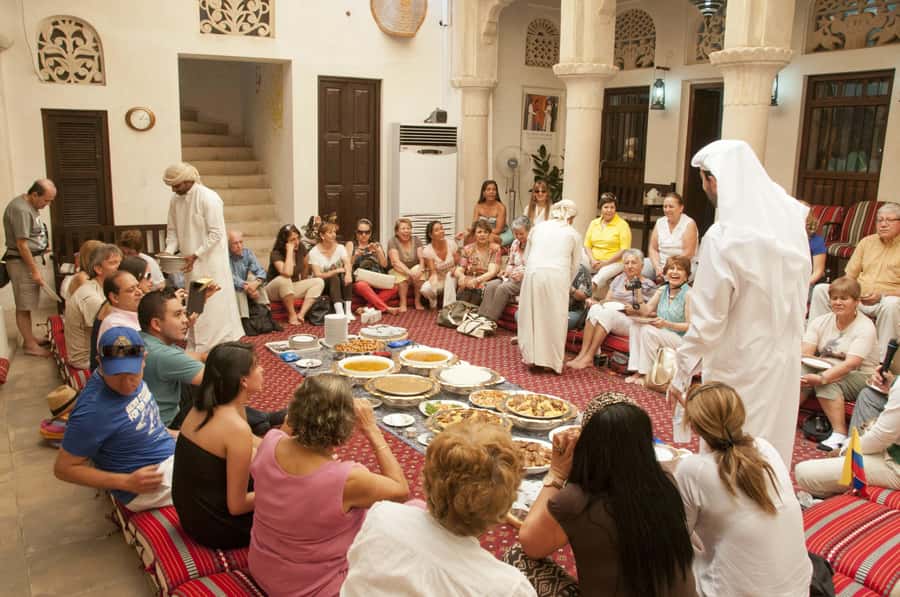
The meal takes place in the courtyard of the Sheikh Mohammed Center for Cultural Understanding, usually called SMCCU. You sit on traditional floor cushions, which gives the lunch a more local feel than a standard restaurant table.
The arrangement is informal. You are not simply served a plate and sent on your way. The host introduces the food, explains customs, and invites questions as the meal unfolds. The center’s guiding idea is Open Doors, Open Mind, and that spirit shapes the session.
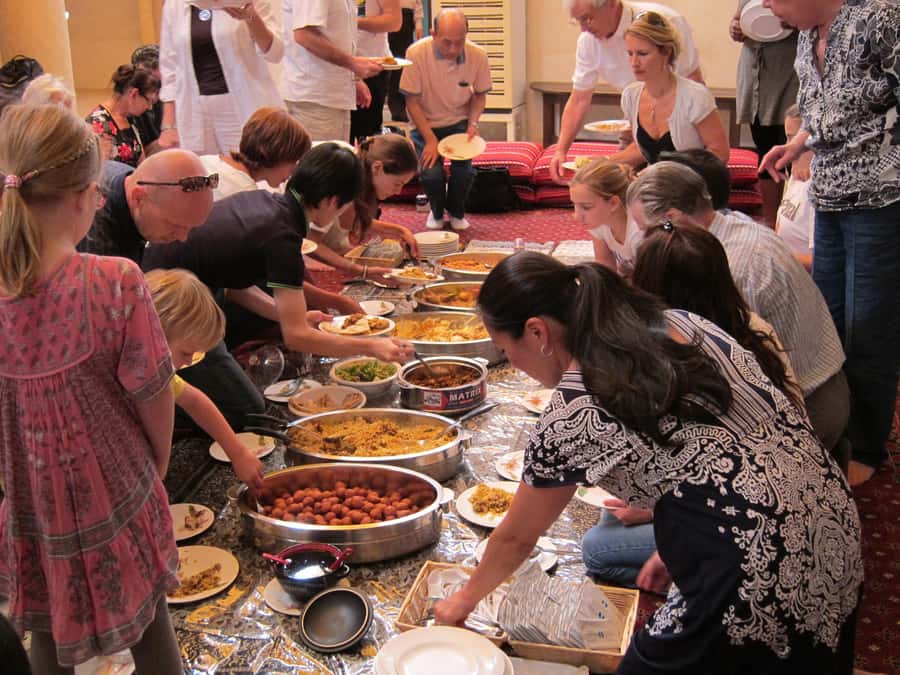
You can expect Arabic coffee, tea, and dates, followed by a selection of local dishes and dessert. The exact menu is not specified, and that is worth keeping in mind if you have strong dietary expectations. The food is described as traditional Emirati, though one particularly positive account found the meal more Indian than expected. That does not make it a poor lunch, but it does mean the culinary side may vary.
The strongest food praise focuses on taste and hospitality. Dishes have been described as delicious, excellent, and fabulous enough to take away. If extra food is available, containers may be provided. You might want to ask about the current takeaway practice rather than assume it is part of every session.
What you learn about Emirati life
The cultural talk covers greetings, everyday expressions, customs, traditions, and the role Islam plays in local values and sensitivities. These subjects help explain things you may notice elsewhere in Dubai, such as forms of welcome, dress, family expectations, religious practice, and public manners.
The value is not just in receiving a list of rules. You can ask why a custom matters and how it fits into daily life. That difference is important. A short briefing on etiquette may tell you what to do, but an open discussion helps you understand the reasons behind it.
The hosts also discuss local culture in relation to the wider United Arab Emirates. Dubai is international and home to people from many parts of the world, yet Emirati traditions remain an important part of public and private life. This lunch gives you a chance to separate local Emirati customs from the broad mix of cultures you will encounter across the city.
Islam is part of the discussion, presented in the context of local values and sensitivities. If you have wondered about religious customs but were unsure how to ask, this is an appropriate place to do so. Questions are welcomed, provided they are asked with basic respect. The atmosphere is relaxed rather than formal, and hosts have been praised for answering difficult questions fully.
The hosts make or break the hour and a half
The quality of the host matters a great deal here because the lunch depends on conversation. Names associated with especially well received sessions include Khaled, Nasser, Ruqaya, and Moeen Murad.
Khaled is described as open and engaging, while Nasser is praised for his information and sense of humor. Ruqaya led a session that focused clearly on the center’s aim of opening minds through an Arabic meal. Moeen Murad was also praised for explaining local customs and responding well to questions.
You should not book this expecting a fixed performance delivered word for word. Each session can change according to the questions in the room. That is one of its strengths, but it also means your experience depends partly on the group and the host assigned that day.
The best way to get value is to arrive with a few real questions. You might ask about Emirati hospitality, the meaning of Arabic coffee and dates, how Islamic values affect everyday conduct, or how local traditions fit into modern Dubai. The center specifically encourages this kind of exchange, so there is no need to sit quietly and wait for a lecture.
A few more Dubai half-days to weigh up
- Dubai: Burj Khalifa Levels 124 & 125 Entry Ticket + Options
★ 4.3 · 90,891 reviews - Dubai: Desert Safari, Quad Bike, Camel Ride & Al Khayma Camp
★ 4.9 · 68,962 reviews - Dubai: Desert Safari, Quad Bike, Camel Ride and Sandboarding
★ 4.9 · 43,505 reviews - Dubai: Safari, Quad Bike, Camel Ride, and Buffet Dinner
★ 4.9 · 33,424 reviews
Why the food is more than a sample plate
Lunch gives the cultural talk a natural setting. Food often makes conversations easier, and shared dishes can explain customs in a way that a museum display cannot.
Arabic coffee and dates are especially useful introductions. They are not just refreshments. They are tied to hospitality and the act of welcoming someone into your space. Tasting them while your host explains local habits gives you context you can remember later when coffee is offered elsewhere in the UAE.
The rest of the meal includes a variety of local dishes and dessert. Since the menu can differ, I would not choose this activity as a food tour with a guaranteed dish list. Choose it if you want to taste Emirati cooking while learning how food, welcome, and social customs connect.
Portion size appears generous enough that some people have been able to take food away. The use of disposable containers and plastic bags has also raised an environmental concern. If you plan to take leftovers, ask whether you may bring a reusable container. That small step fits the center’s wider discussion of modern values and responsible choices.
The value of $42 per person
At $42, this is not the cheapest lunch you can buy in Dubai. You are paying for more than food, though. The price includes a 1.5-hour cultural program, a host or hostess, Emirati dishes, Arabic coffee, tea, dates, and access to a traditional historic house.
I consider the price fair if you place a real value on context and conversation. A restaurant can give you local flavors, but it may not explain why hospitality works as it does or give you a comfortable place to ask sensitive questions. A walking tour can show you Al Fahidi, but it may not include a seated meal and a discussion of Islam and local customs.
The value is weaker if you want a large menu, a long meal, or a detailed tour of the historic district. This is a compact cultural introduction, not a full-day program. You spend about 90 minutes at the center, and the activity does not promise transport, a wider neighborhood tour, or a set list of dishes.
For many people, the best timing is the first day in Dubai. It can help you read the city with more care during the rest of your stay. You may notice customs and forms of hospitality differently after hearing them explained by an Emirati host.
Who should book this cultural lunch
I would recommend it to first-time visitors who want a clear introduction to Emirati culture without committing to a long museum visit or formal lecture. It also suits couples, families, and solo visitors who enjoy conversation and are willing to ask questions.
It is a good match for you if:
- You want to understand local customs rather than only photograph old buildings.
- You are curious about Islam and its place in UAE life.
- You enjoy tasting food in a social setting.
- You prefer a relaxed discussion to a rigid tour script.
- You want to visit Al Fahidi and sit inside a traditional house.
- You are looking for an activity that works well early in a Dubai stay.
It may be less suitable if you need a guaranteed menu, dislike floor seating, or prefer a quiet meal with little discussion. It is also not the right choice if you expect a broad walking tour of Al Fahidi. The historic setting is part of the experience, but the focus remains lunch and conversation.
Practical details before you book
The activity lasts 1.5 hours, and the host or greeter speaks English. Starting times vary, so check availability for your date. Lunch, local Emirati dishes, Arabic coffee, tea, and dates are included.
The meeting point is House 26, Al Musallah Road, Al Fahidi Historic District, adjacent to the Ruler’s Court. Because the district can be difficult to navigate, use the exact house number and arrive early. Construction and confusing signs have made late arrivals a real possibility.
The experience is wheelchair accessible. Free cancellation is available up to 24 hours in advance for a full refund, and you can reserve now while paying later. Those policies are useful if your Dubai schedule is still shifting.
The activity is offered in English only according to the supplied details. If you need another language, do not assume it will be available.
Should you book the SMCCU lunch?
Book it if you want a human introduction to Dubai’s Emirati side. The food is pleasant, the old house gives the meal a strong sense of place, and the chance to ask direct questions is the real reason to come.
I would especially choose it for the first day or two of a Dubai visit. You will leave with useful context for the rest of the trip, not just a full stomach. Keep your expectations measured: the menu may vary, the meal may lean toward Indian flavors on some days, and the session is short. At $42, it earns its price through the host-led cultural exchange rather than culinary variety.
FAQ
How long does the cultural lunch last?
The activity lasts 1.5 hours.
What food is included?
You receive a selection of local Emirati dishes, dessert, Arabic coffee, tea, and dates. The exact dishes are not specified.
Where does the lunch take place?
It takes place at the Sheikh Mohammed Center for Cultural Understanding, House 26 on Al Musallah Road in the Al Fahidi Historic District, next to the Ruler’s Court.
Is the activity conducted in English?
Yes. The listed host or greeter language is English, and the additional information lists English as the activity language.
Can I ask questions about Islam and Emirati customs?
Yes. The program encourages questions about local culture, traditions, religion, values, and sensitivities in an informal setting.
Is the venue wheelchair accessible?
Yes, the activity is listed as wheelchair accessible.
Can I cancel the booking?
Yes. You can cancel up to 24 hours in advance for a full refund. You can also reserve now and pay later.
Just added around Dubai
- Abu Dhabi City Tour with Ferrari Park★ 5.0 · 15 reviews
- Abu Dhabi City Tour with Ferrari world Full Day★ 4.5 · 11 reviews
- Abu Dhabi City Tour with Ferrari World Tickets★ 5.0 · 16 reviews
- Abu Dhabi City Tour with Private Car★ 5.0 · 11 reviews
- Abu Dhabi City Tour with Buffet Lunch★ 4.5 · 17 reviews
- Abu Dhabi City Tour in a 4×4 Shared Vehicle★ 5.0 · 41 reviews
- Abu Dhabi City Tour with Desert Safari Adventure★ 5.0 · 8 reviews
- Exclusive Full-Day Abu Dhabi City Tour with Sheikh Zayed Mosque★ 5.0 · 38 reviews
Dubai Tours, compared.
Burj Khalifa Levels 124 & 125 Entry Ticket + Options
Read our review →
Desert Safari, Quad Bike, Camel Ride & Al Khayma Camp
Read our review →
Safari, Quad Bike, Camel Ride, and Buffet Dinner
Read our review →
Red Dune Safari, Quad Bike, Camel Ride, BBQ Dinner
Read our review →
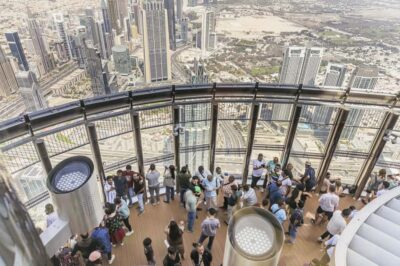
Burj Khalifa Sky Level 148, 124, & 125 Entry Ticket
Read our review →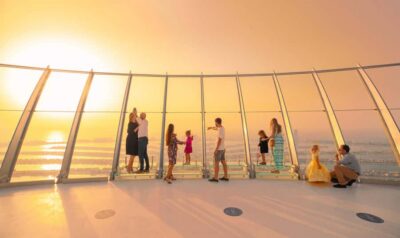
The View At The Palm Observatory Entry Ticket
Read our review →
Browse the lists this tour appears in