
Reviewed · ABU DHABI TOURS
Abu Dhabi: Inside Heritage Village Walking Tour
Abu Dhabi’s Heritage Village gives you a quick look at the country before oil wealth reshaped the capital. In one compact visit, you’ll see Bedouin tents, mud-brick houses, a mosque, a souk, and working craft displays, with the modern Corniche skyline just beyond the walls.
I like the local guide’s personal explanations and the chance to watch pottery, weaving, and metalwork rather than simply viewing old objects behind glass. The $13 price is also easy to justify for entry, a guided walk, craft demonstrations, a museum visit, and skyline photos.
The main caution is timing. The activity is advertised as 30 minutes, while the guided itinerary is listed as 45 minutes, and one booking was sold for a Friday afternoon start before the site opened. Check the current start time, especially on Friday, and allow for redevelopment that may leave some areas closed.
Key things to know before you go
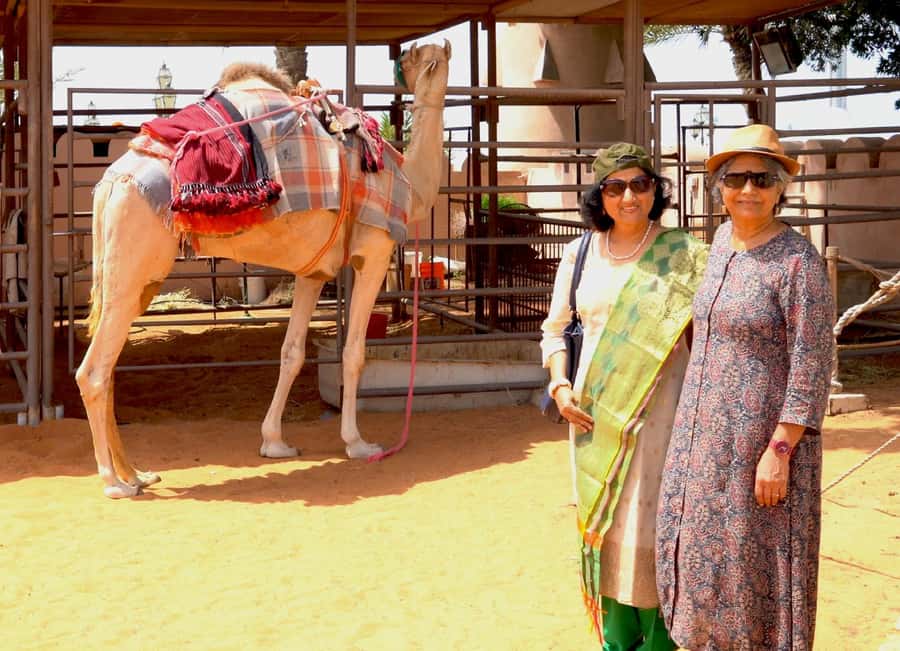
- See old and new Abu Dhabi together: Traditional buildings and Bedouin tents are set against striking Corniche and city views.
- Watch Emirati crafts in action: Pottery, weaving, and metalwork demonstrations make the visit more useful than a simple walk through replicas.
- Meet at the main entrance: Your guide waits in front of the Heritage Village entrance, so arrive there rather than assuming hotel pickup.
- Expect an English tour: The live guide speaks English, with local cultural explanations built into the walk.
- Allow roughly 30 to 45 minutes: The advertised duration and stated guided-tour length differ, so confirm the schedule before booking.
- Dress modestly: Appropriate attire is requested for this cultural site.
Why this short walk is worth your Abu Dhabi time
Heritage Village is not a vast archaeological site. It is an open-air cultural display designed to show how Emirati life looked before Abu Dhabi became a modern capital. That makes the place especially useful if you are staying in the city and want context without giving up half a day.
The setting does much of the work. You walk among traditional-style structures, then look past them toward the Corniche and Abu Dhabi’s tall buildings. That contrast helps you understand the scale of change here. A photograph can show the skyline, but a guide can explain why Bedouin tents, pearl tools, trading spaces, and simple homes matter.
I would not book this as your only cultural experience in the UAE. The village is small, and some parts may be closed while redevelopment continues. But at $13 per person, it works well as a focused introduction, particularly before visiting grander modern sights such as the Sheikh Zayed Grand Mosque or Qasr Al Watan.
More history-led days in Abu Dhabi:
- Dubai: Abu Dhabi Grand Mosque, Palace, and Heritage Village
★ 4.8 · 1,265 reviews - Dubai: Abu Dhabi Trip with Lunch at Al Khayma Heritage Restaurant
★ 5.0 · 805 reviews - Abu Dhabi Sightseeing Tour: Sheikh Zayed Mosque, Heritage Village & Dates Market
★ 4.5 · 226 reviews
Meeting your guide at Heritage Village
You meet in front of the main entrance waiting area. Transport is not included, so you need to make your own way to the site. The meeting point is simple, but do not arrive with the assumption that a guide will collect you from your hotel or from a nearby attraction.
The walk is conducted in English. Guides named in recent bookings include Zain and Shamnad, both praised for making the visit friendly, interactive, and easy to follow. Another guide was described as helpful when explaining local culture and community life in Abu Dhabi. Since guide assignments can change, treat those names as examples rather than a guarantee.
Arrive a little early. One booking involved a short wait for the guide, and arriving before the scheduled time gives you a chance to find the entrance and sort out any opening-hour issue. This matters most on Fridays, when the site’s opening time has caused a serious scheduling problem for at least one visitor.
A Bedouin camp in the middle of the capital
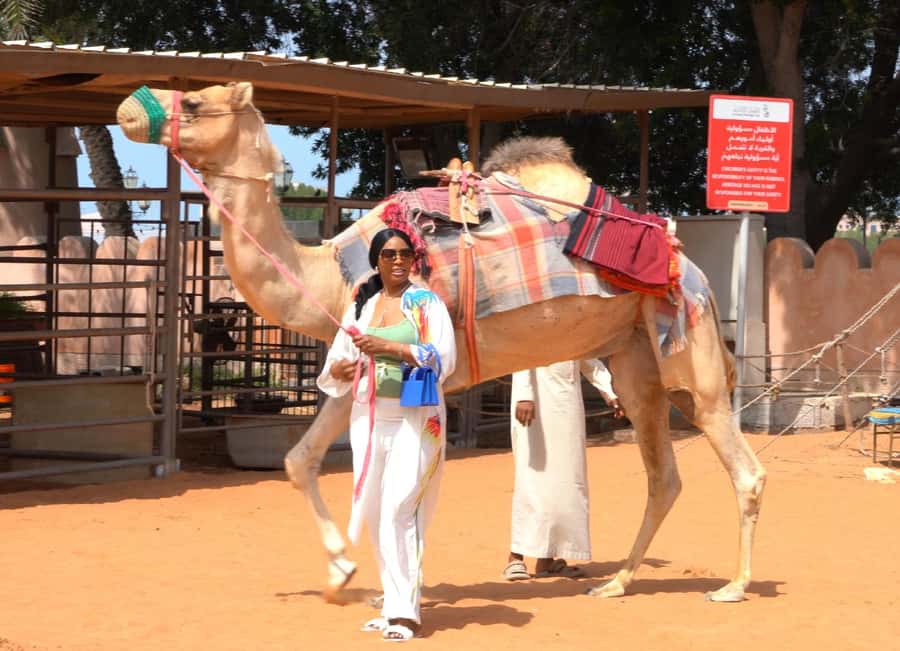
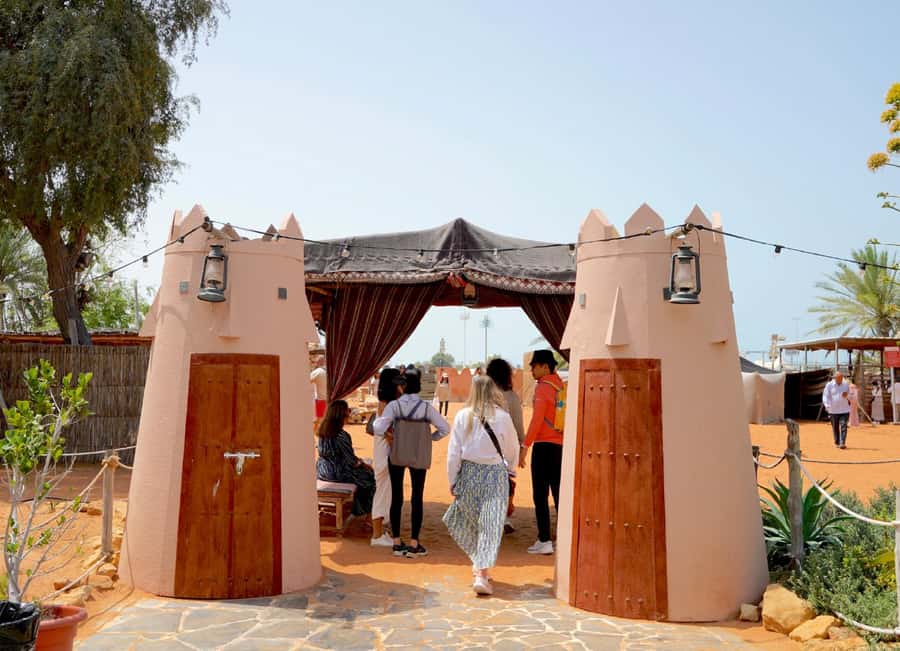
The first major section introduces the desert way of life through a traditional Bedouin camp. You see tents and a fire pit, simple features that point to the practical side of life before air conditioning, high-rise apartments, and paved highways changed the region.
The tent display is more useful with a guide beside it. You can ask how the space was used, how families organized daily life, and how people adapted to the desert. The supplied tour information does not promise a full reconstruction of daily activities, so expect interpretation and visual examples rather than a staged performance.
This is one reason the guided option makes sense. On your own, a tent can look like a familiar museum prop. With explanations about Bedouin life and Emirati customs, the display becomes a starting point for understanding movement, shelter, hospitality, and survival in a harsh climate.
The pace is gentle and the section is compact. If you want long demonstrations or a detailed anthropology lesson, the short format may feel limited. If you want a clear first look at traditional life, it does the job without burying you in dates.
Mud-brick homes, an old mosque, and a traditional souk
The village continues with replicas of mud-brick houses and an old mosque. These buildings help you picture a settlement made from local materials, with thick walls and plain forms that contrast sharply with Abu Dhabi’s polished towers.
Keep your expectations in check. These are recreated structures, not untouched homes from an earlier century. Their value comes from the way they group several parts of traditional life in one walk. You can see how housing, worship, trade, and craft production fit together rather than studying each subject in isolation.
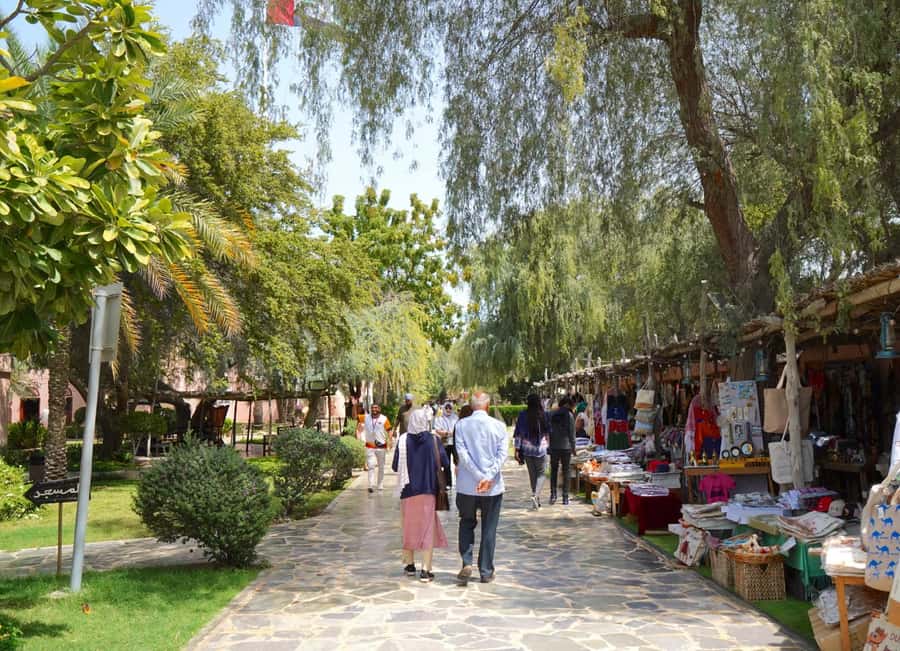
The traditional souk section adds movement and human interest. Craftsmen demonstrate pottery, weaving, and metalwork using methods passed down through generations. This is the part where you should ask questions. The tour specifically allows interaction, and the guide can help connect the tools and techniques to wider Emirati customs.
The strongest praise for this experience centers on the guide’s explanations and friendly approach. That matters here because the displays themselves are fairly simple. A good guide turns a row of objects into a conversation about work, family, trade, and community. You may get a more basic walk if the guide is less engaging, so the quality of this experience depends heavily on who leads it.
More walking tours in Abu Dhabi:
- Abu Dhabi: Guided Walking Tour at Sheikh Zayed Grand Mosque
★ 4.7 · 511 reviews - Abu Dhabi: Inside Qasr Al Watan Walking Tour
★ 4.8 · 47 reviews - Downtown Walking tour with Emirati local
★ 5.0 · 9 reviews - Dubai: Private Old Town, Heritage & Souks Walking Tour
★ 4.9 · 102 reviews
Watching pottery, weaving, and metalwork
Live craft demonstrations are included, and they are the most hands-on feature of the visit. You are not just looking at finished pieces. You can watch artisans use traditional methods and ask about what they are doing.
Pottery gives you a sense of how useful objects were made. Weaving shows the patience and skill behind textiles that might otherwise appear decorative. Metalwork adds another practical craft to the picture. The tour does not specify the exact objects produced or guarantee that every craft will be operating during every visit, so think of these as scheduled or available demonstrations rather than a fixed stage show.
I like this part because it puts daily labor back into the story. Museums can make the past feel tidy and finished. A person working with a tool shows that these skills are learned, repeated, and kept alive.
The short duration also shapes the experience. You may have time to watch and ask a few questions, but not to spend a long period with each artisan. If one craft interests you especially, tell your guide. A simple question may give you more useful information than trying to rush through every display.
The small museum and its older objects
Entry to the on-site museum is included. It displays ancient artifacts, pearl-diving tools, and historical photographs of Abu Dhabi.
The pearl-diving equipment is especially important for understanding the city’s earlier economy. Before oil wealth, pearl gathering was a major part of life along the Gulf. Tools can look plain, but they point to difficult work done at sea and to the networks of families and traders that supported it.
The photographs help bridge the gap between the recreated village and the present-day city. You can compare older views of Abu Dhabi with the skyline visible outside. That comparison is one of the best reasons to visit the museum rather than stopping after the craft stalls.
This is a small museum, not a large national collection. I would expect a concise display that adds background to the walk, not a full afternoon of galleries. If the site is busy or your time is short, listen closely to the guide’s explanation of the pearl tools and photographs. Those details may be easy to miss on a quick pass.
Corniche views and the best photo moments
The village offers views across the Corniche toward Abu Dhabi’s skyline. This is a pleasant surprise: the visit gives you both a look back at older Emirati life and a clean view of the modern city.
The photos work because of the contrast. Traditional-style walls and tents occupy the foreground, while towers and the waterfront provide the background. You do not need a separate city-view stop to capture that particular mix.
Light and weather will affect the results, but the tour information specifically identifies the skyline as a photo opportunity. Keep your camera ready during the walk rather than waiting until the end. Your guide may point out a better angle or pause briefly while explaining the setting.
The view also gives the visit a sense of place. You are not looking at an isolated heritage display. You are standing in present-day Abu Dhabi, with the city’s older story arranged in front of you and its newer identity rising beyond it.
Timing, redevelopment, and Friday planning
The advertised duration is 30 minutes, while the guided portion is also described elsewhere as 45 minutes. That is not a major difference, but it affects a tightly planned day. I would allow at least an hour for meeting the guide, walking through the site, taking photos, and handling a possible wait.
Redevelopment is another practical issue. Some areas may not be open during your visit. This does not cancel the value of the Bedouin camp, craft displays, museum, and skyline, but it means you should not expect every part of the village to be available.
Friday deserves special care. One scheduled 1:30 p.m. tour ran into a site opening time of 3 p.m., leaving the booking without a workable meeting. Check the current opening hours and starting time directly when you reserve. If the tour platform offers several times, do not select one blindly based on the displayed schedule.
The activity allows cancellation up to 24 hours before the start for a full refund, and you can reserve now and pay later. Those terms are useful if your Abu Dhabi plans may shift, but they do not solve an incorrect start time. Confirm the site’s hours first.
Is $13 a fair price?
At $13, this is a low-cost cultural stop. You get entrance to Heritage Village, entry to the small museum, live craft demonstrations, a guided explanation of Bedouin life and Emirati culture, and time for skyline photos.
The value is strongest if you want orientation. A guide helps you understand what you are seeing, and the visit covers several themes in a short period: desert life, traditional architecture, crafts, pearl diving, and the growth of Abu Dhabi.
The value is weaker if you expect a large museum, a long guided program, transport, food, or an expansive historic quarter. None of those are included. You also need to pay for your own transportation and personal expenses.
For families, first-time visitors, and anyone with a short Abu Dhabi schedule, the price is easy to defend. For serious students of Emirati history, it should be one piece of a wider cultural plan rather than the whole plan.
Who should book this Heritage Village walk?
I would recommend it to you if you want a short, low-cost introduction to Emirati traditions and prefer explanations to silent displays. It suits first-time visitors, culture-minded families, photographers, and anyone already visiting the Corniche area.
It also works well between larger Abu Dhabi sights. The short format lets you add a cultural stop without committing to a full-day excursion. The guide’s interactive style is a plus if you like asking questions rather than simply following a marked route.
I would hesitate if you want an untouched historic site, a long museum visit, or a guaranteed full set of open buildings. Redevelopment may reduce the available area, and the Friday scheduling problem means you need to check times carefully.
My verdict on the Abu Dhabi Heritage Village tour
Book this walk if you want the basics done well: a Bedouin camp, traditional buildings, working crafts, pearl-diving tools, old photographs, and a modern skyline in one compact visit. The guide is the key ingredient, and the strongest experiences have come from guides such as Zain and Shamnad, who made the cultural explanations friendly and interactive.
At $13, you are buying useful context rather than a grand attraction. Confirm the day’s opening time, especially on Friday, expect possible redevelopment, and allow closer to 45 minutes than 30 if you want to listen and take photographs. With those limits understood, this is a sensible and affordable addition to an Abu Dhabi sightseeing day.
FAQ
Where does the tour begin?
You meet your English-speaking guide in front of the Heritage Village main entrance waiting area.
How long does the experience last?
The activity is advertised as 30 minutes, while the guided itinerary is listed as 45 minutes. Check the available start times and allow extra time for meeting your guide and taking photos.
What language is the tour conducted in?
The live tour guide speaks English.
Is entry to the museum included?
Yes. Entry to Heritage Village and the on-site museum is included.
Are craft demonstrations part of the tour?
Yes. The experience includes live demonstrations of traditional crafts such as pottery, weaving, and metalwork.
Is transportation included?
No. You are responsible for getting to Heritage Village, and transport is not included.
What should I wear?
Modest and appropriate attire is requested to help maintain a respectful setting during your visit.
Just added around Abu Dhabi
- Abu Dhabi City Tour with Ferrari Park★ 5.0 · 15 reviews
- Abu Dhabi City Tour with Ferrari world Full Day★ 4.5 · 11 reviews
- Abu Dhabi City Tour with Ferrari World Tickets★ 5.0 · 16 reviews
- Abu Dhabi City Tour with Buffet Lunch★ 4.5 · 17 reviews
- Abu Dhabi City Tour with Private Car★ 5.0 · 11 reviews
- Abu Dhabi City Tour in a 4×4 Shared Vehicle★ 5.0 · 41 reviews
- Abu Dhabi City Tour with Desert Safari Adventure★ 5.0 · 8 reviews
- Exclusive Full-Day Abu Dhabi City Tour with Sheikh Zayed Mosque★ 5.0 · 38 reviews
Abu Dhabi Tours, compared.



Dubai To Abu Dhabi: Grand Mosque, Royal Palace & Etihad Towers
Read our review →
Abu Dhabi Grand Mosque & Louvre Museum Full-Day
Read our review →

Abu Dhabi City Sightseeing & Sheikh Zayed Mosque
Read our review →
Abu Dhabi Day-Trip Grand Mosque, Royal Palace & Lunch
Read our review →
Desert Safari with BBQ, Camel Ride & Sandboarding
Read our review →Browse the lists this tour appears in