
Reviewed · HISTORICAL TOURS
Dubai: Al Fahidi Historical District Heritage Tour
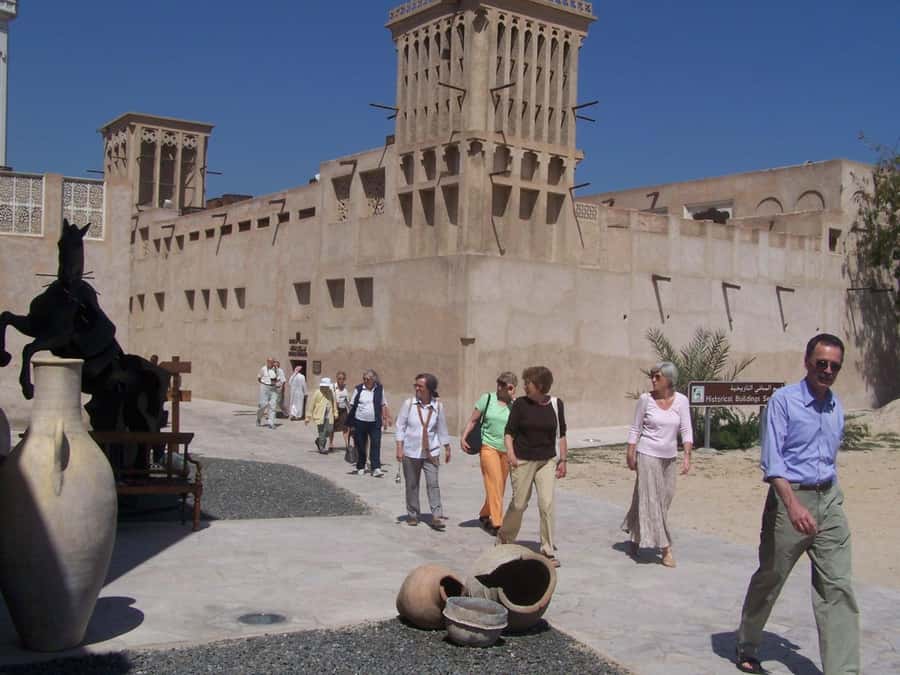
Dubai’s skyscrapers and artificial islands get most of the attention, but the Al Fahidi Historical District offers a useful look at the city before oil wealth reshaped it. You’ll walk among old windtower houses, visit the Ruler’s Court Mosque, and return to the SMCCU for Arabic coffee, dates, and a relaxed cultural Q&A.
I like the direct access to the mosque and the chance to ask plain questions about Islam and daily life in the Emirates. I also like the traditional welcome and the small details of the setting, especially the windtower house. The main consideration is that the discussion takes a good share of the 90 minutes, so this is not a long walking tour through Old Dubai.
Key points to know
- Windtower houses: See the last remaining examples of Al Fahidi’s traditional cooling design.
- Ruler’s Court Mosque: Enter a mosque that is open to this SMCCU program.
- Open questions: Ask about Emirati customs, religion, family life, and city life without a fixed script.
- Arabic welcome: Share coffee and dates at the end of the visit.
- Short format: The 1.5-hour schedule suits a first look at Old Dubai, but limits the amount of walking.
- Good value at $31: The price covers the guide, mosque entry, SMCCU visit, coffee, and dates.
Starting at the SMCCU windtower house
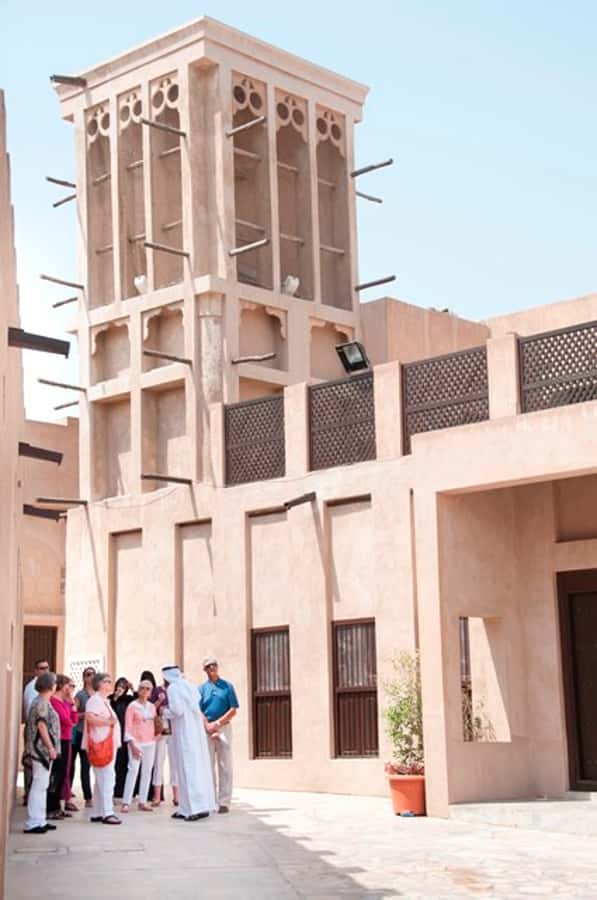
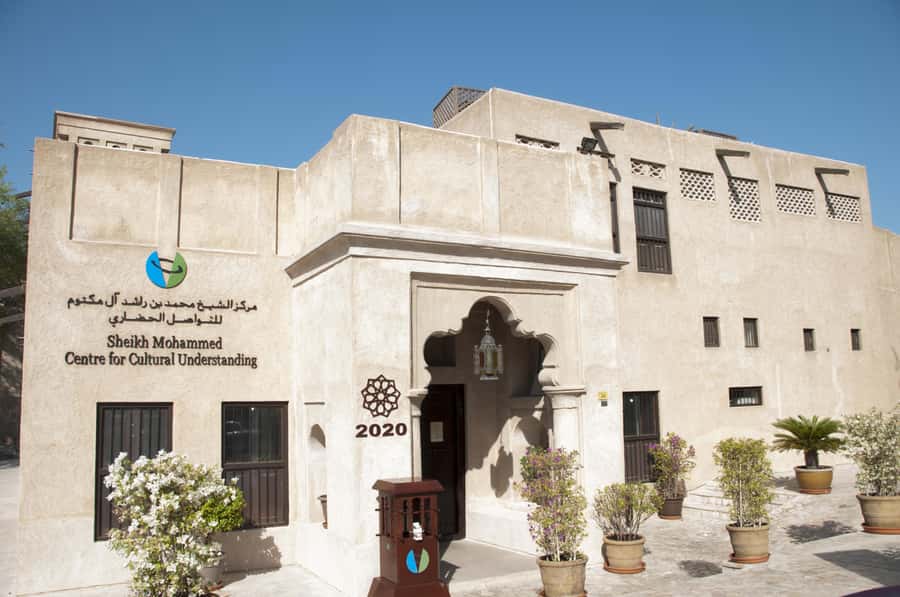
Your meeting point is the Sheikh Mohammed Center for Cultural Understanding, known as the SMCCU, at House 26 on Al Musallah Road. It sits by the Al Seef roundabout in Bur Dubai, beside the Ruler’s Court and near the British Embassy.
The setting matters. You do not begin in a modern hotel lobby or on a generic city street. You start inside one of Al Fahidi’s traditional windtower houses, where the architecture gives you an immediate sense of how older homes dealt with Dubai’s heat.
The SMCCU focuses on cultural understanding through its Open Doors. Open Minds. approach. In practical terms, that means you are encouraged to ask direct questions instead of simply listening to a prepared speech. For many people, this is the best part of the experience.
The guide speaks English, and no guide name is provided when you book. The tone is designed for conversation, so bring the questions you might otherwise hesitate to ask. You can ask about local customs, Islam, religion, family life, or the changes that turned Dubai from a creek settlement into a global city.
More history-led days in Dubai:
- Dubai Evening Heritage Safari by Vintage G Class Al Marmoom Oasis
★ 5.0 · 1,500 reviews - Dubai: Abu Dhabi Grand Mosque, Palace, and Heritage Village
★ 4.8 · 1,265 reviews - Dubai Camel Desert Safari, Traditional Meal & Heritage Activities
★ 5.0 · 937 reviews
Reading Al Fahidi’s windtower architecture
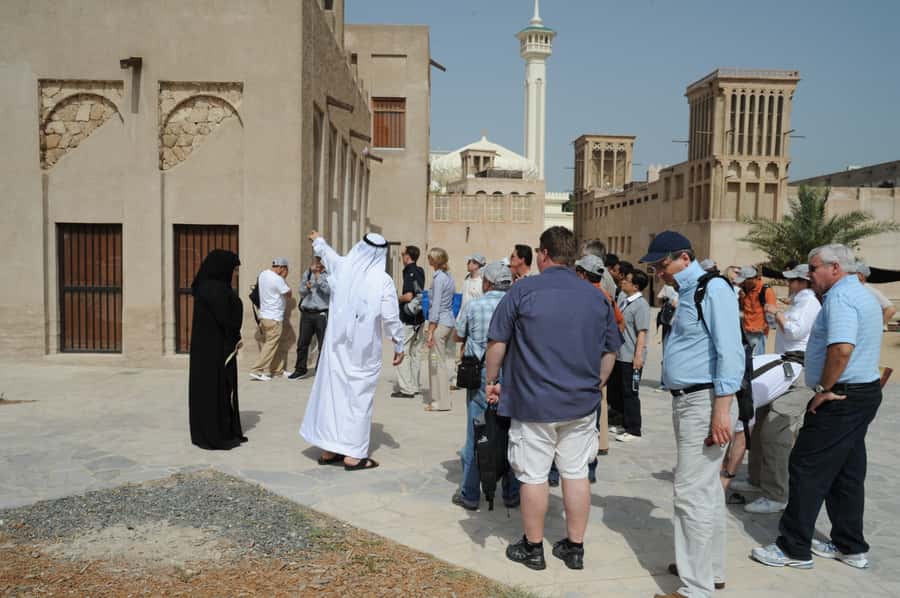
The first outdoor portion takes you through Al Fahidi, also known as Al Bastakiya. This is one of the oldest surviving parts of Dubai, with the last remaining windtower houses in the city.
The windtowers are not just decorative flourishes. They are part of the story of practical home design before air-conditioning. Your guide explains how the buildings were arranged and how the windtower form helped move air through the house.
You should set your expectations correctly. Al Fahidi is an important historic district, but this 90-minute program does not attempt to cover every lane, building, or museum in the area. The walk is paired with a substantial conversation at the SMCCU, so you get context rather than a long route.
That balance is useful if you want to understand what you are seeing. A quick stroll through old walls can become a photo stop with little meaning. Here, the guide connects the architecture to Dubai’s early settlement around the Creek and to the daily lives of the people who lived in these homes.
It is also a good contrast to Dubai’s newer sights. After time among towers, shopping centers, and grand modern projects, the low courtyards and windtowers make the city’s recent growth easier to grasp.
Entering the Ruler’s Court Mosque
The mosque visit is the tour’s most distinctive feature. The Ruler’s Court Mosque is open to participants in this SMCCU program, giving you access that is not part of an ordinary walk around the district.
Expect a short discussion about the mosque and its place in Emirati life. The purpose is cultural understanding, not a lengthy religious lecture. Your guide can explain basic points about Islam and answer questions in a setting connected to the faith itself.
The SMCCU provides clothing that you can borrow for the mosque portion. That makes the visit easier if you arrive in clothing that does not meet the required standard. You should still approach the stop with respect, listen to the instructions, and remember that this is an active religious setting.
One practical point is worth noting: the mosque comes after the opening discussion and district walk. If you are mainly interested in seeing the mosque, stay for the full program. Leaving early would mean missing the stop that gives this experience much of its special value.
The mosque visit is short, so do not book this expecting an extended architectural tour. Its value is the chance to enter, learn about its role, and ask questions in a suitable setting.
Coffee, dates, and the cultural Q&A
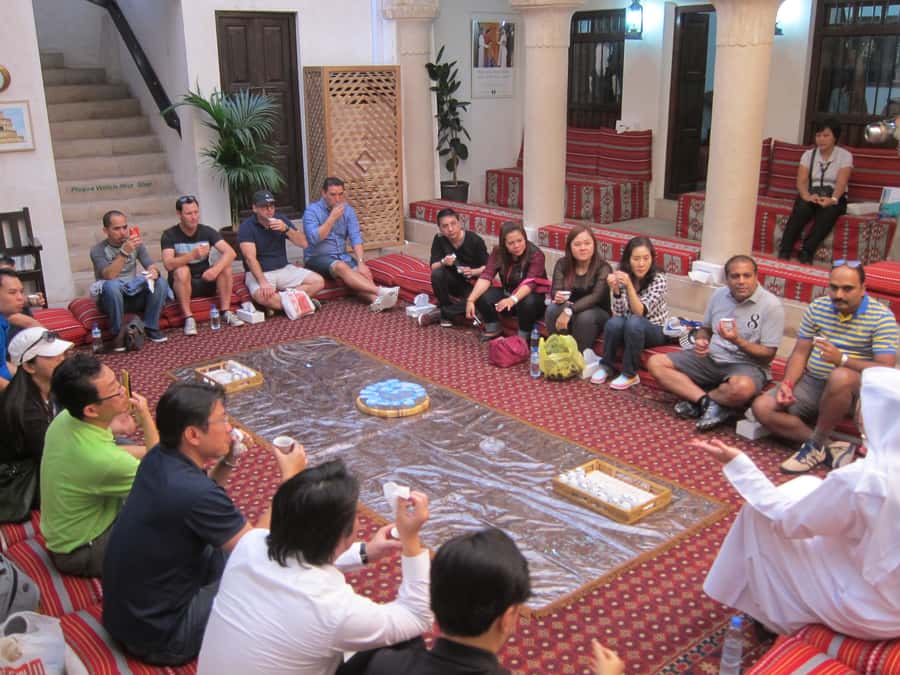
After the district walk and mosque discussion, you return to the SMCCU house for Arabic coffee and dates. This is more than a snack stop. The welcome gives the program a social shape and lets the conversation continue in a comfortable traditional setting.
Arabic coffee is typically served in small portions, and dates are a familiar part of hospitality in the region. The experience does not promise a meal, so eat beforehand if you need something substantial. Think of it as a welcome ritual and a chance to sit down, not a food tour.
The Q&A is central to the program. The supplied schedule makes clear that the discussion can take close to an hour for some groups. That is good news if you want a patient explanation of local culture, but it can disappoint you if you booked a fast-paced sightseeing walk.
One earlier participant expected more time walking and found the cultural discussion different from what they had imagined. That is the clearest warning about the format. Read the tour as a conversation-led cultural visit with a short neighborhood walk, not as a district hike with a few comments along the way.
If you enjoy asking questions, the format works well. You can move beyond surface facts and get explanations about customs, religion, and life in the Emirates. If you prefer to keep moving from one landmark to the next, the seated portion may feel long.
A few more Dubai half-days to weigh up
- Dubai: Burj Khalifa Levels 124 & 125 Entry Ticket + Options
★ 4.3 · 90,891 reviews - Dubai: Desert Safari, Quad Bike, Camel Ride & Al Khayma Camp
★ 4.9 · 68,962 reviews - Dubai: Desert Safari, Quad Bike, Camel Ride and Sandboarding
★ 4.9 · 43,505 reviews - Dubai: Safari, Quad Bike, Camel Ride, and Buffet Dinner
★ 4.9 · 33,424 reviews
What the 90-minute schedule really gives you
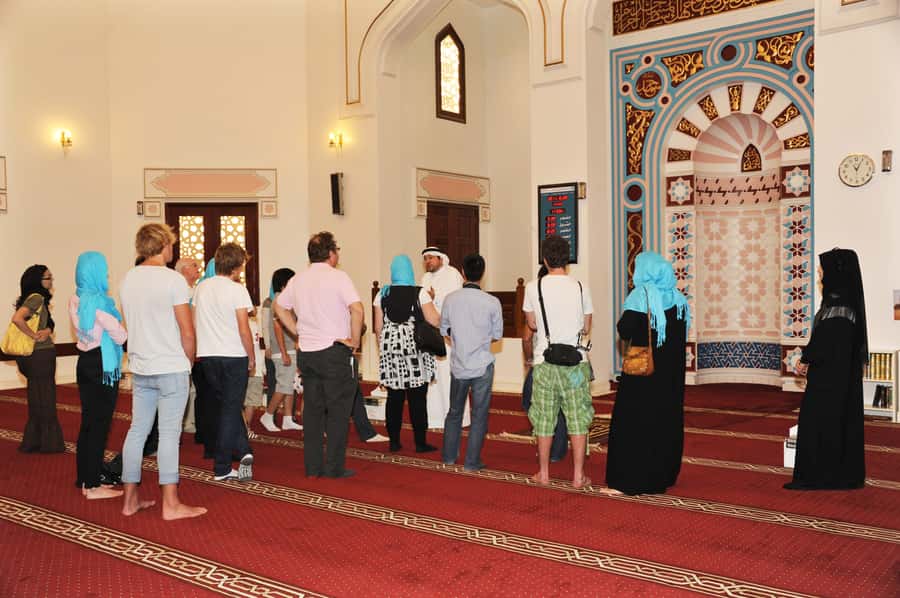
Ninety minutes is enough for a focused introduction, but not enough for a full tour of Old Dubai. The schedule normally combines four elements:
- A welcome at the SMCCU windtower house
- A guided walk through Al Fahidi and its traditional architecture
- A short visit and discussion at the Ruler’s Court Mosque
- Arabic coffee, dates, and open questions at the SMCCU
The program’s strength is its clear focus. You do not spend the time racing between distant sights. Instead, the guide uses one historic quarter, one mosque, and one cultural center to explain how the pieces fit together.
The tradeoff is coverage. You will not get a broad tour of every old-Dubai attraction from the information provided. If you want a longer walk around the Creek area, you may need to add another activity to your day.
The compact timing works especially well at the start of a Dubai stay. It gives you cultural context before you visit other parts of the city. It also fits neatly into a day when you want a short, structured stop rather than a full-day commitment.
Is $31 a fair price?
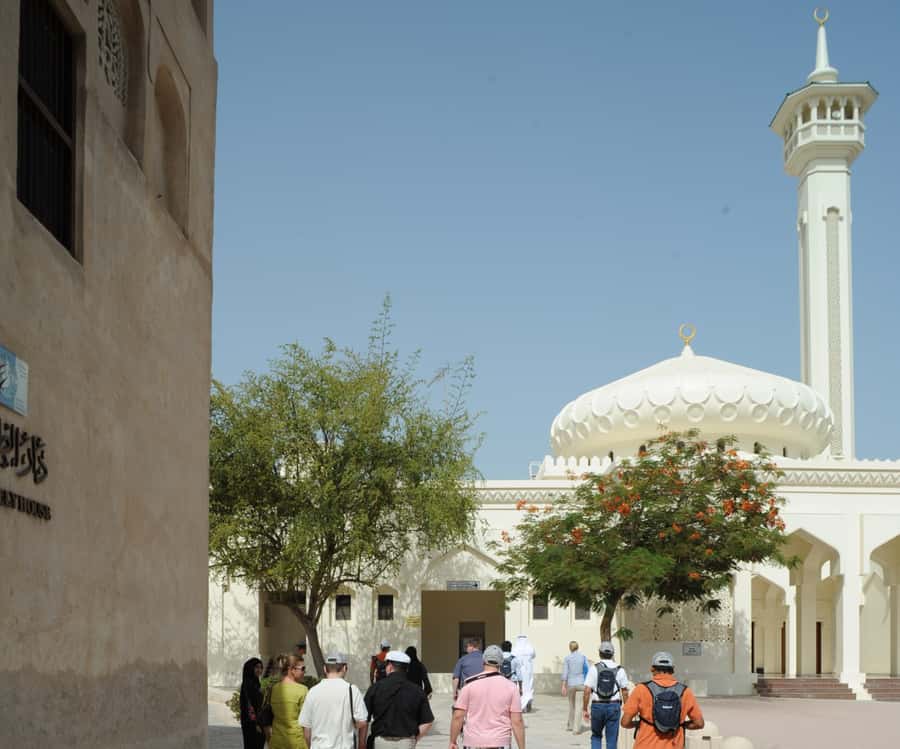
At $31 per person, this tour is priced as a modest cultural experience rather than a major sightseeing outing. The fee includes the guided Al Fahidi tour, entry to the Ruler’s Court Mosque and SMCCU, Arabic coffee, and dates.
I think the value depends on what you want from Old Dubai. If your main goal is a long walk and lots of photo stops, the price may feel less attractive because much of the time is devoted to discussion. If you want access to the mosque and a chance to ask questions in a formal cultural setting, the price is more convincing.
The mosque entry is an important part of the value. The program gives you a structured way to learn about the building and its role in Emirati life, rather than simply viewing it from the outside.
The English-speaking guide also adds value for visitors who want clear explanations. You are not left to guess at the meaning of the windtowers, the district, or the customs around the coffee and dates.
A rating of 4.8 from 40 reviews reflects strong satisfaction overall. The most praised qualities are the cultural insight, the informative presentation, and the feeling of learning something meaningful about the UAE. One American visitor called it the best experience of a Dubai trip, while other comments describe it as interesting and useful for understanding local culture and Islam.
Those reactions point to the right reason to book: not because it is the biggest attraction in Dubai, but because it gives you a human explanation of a place that can otherwise seem hard to read.
Who will enjoy this experience most?
I would recommend this tour to you if you want an introduction to Emirati culture without committing to a long museum visit. It suits first-time visitors who have questions about the UAE and would like a respectful place to ask them.
It is also a strong choice for people interested in religion and architecture. The windtower homes explain older local building methods, while the mosque visit adds a direct connection to Islamic practice and Emirati life.
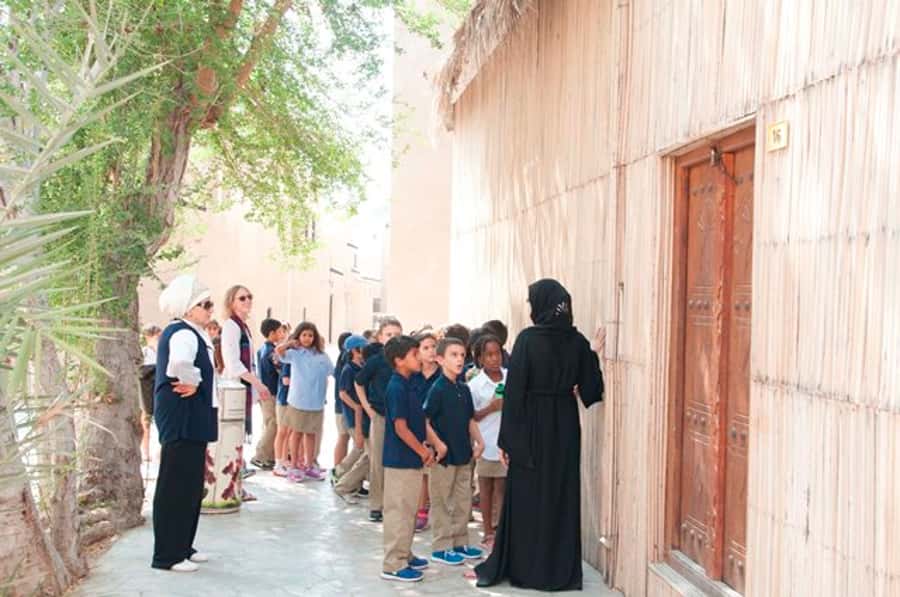
Families may find the Q&A useful if children have questions about customs or religion. The open format can be more engaging than a rigid lecture, though younger children who need constant movement may find the seated discussion slow.
The tour is wheelchair accessible, which makes it a practical option for many visitors. The supplied information does not give detailed route conditions, so you should confirm any specific mobility needs when booking.
You should think twice if you want a high-energy sightseeing tour. The program includes a walk, but the cultural conversation is not a side note. It is one of the main activities.
Practical tips for a smoother visit
Arrive at the SMCCU windtower house, not at a general entrance to the Al Fahidi district. The stated meeting point is House 26 on Al Musallah Road, beside the Ruler’s Court and close to the British Embassy, just behind the Al Seef roundabout.
Dress with the mosque visit in mind. The SMCCU can lend suitable attire, but modest clothing will make the transition easier and show respect from the start.
Bring questions. This is the kind of tour that improves when you participate. You could ask about the meaning of windtowers, the role of the mosque, Arabic coffee, local customs, religion, or everyday life in modern Dubai.
Allow the full 90 minutes. The mosque visit comes later in the program, and the coffee and dates are served after the walk. If you leave during the discussion, you may miss the most distinctive portions.
The activity is offered in English. If you need another language, the information provided does not list one, so English ability is important.
Free cancellation is available up to 24 hours before the start time, and you can reserve now and pay later. That flexibility helps if your Dubai plans are still shifting.
How this compares with a standard Old Dubai walk
A normal neighborhood walk tends to prioritize streets, buildings, and photo stops. This experience gives you less walking but more explanation, especially about religion and local customs.
That distinction matters. Al Fahidi can be explored independently, but you may not know why the windtowers look the way they do or how the district connects to Dubai’s early Creek settlement. The guide supplies that missing frame.
The mosque access also changes the experience. You are not simply passing an important building. You are given a short discussion about its place in Emirati life and a chance to ask questions in context.
The compromise is that the tour may feel talk-heavy. One participant expected more walking through the district and left before the mosque portion. I would avoid that mismatch by booking this only if conversation and cultural explanation sound appealing.
Should you book the Al Fahidi Heritage Tour?
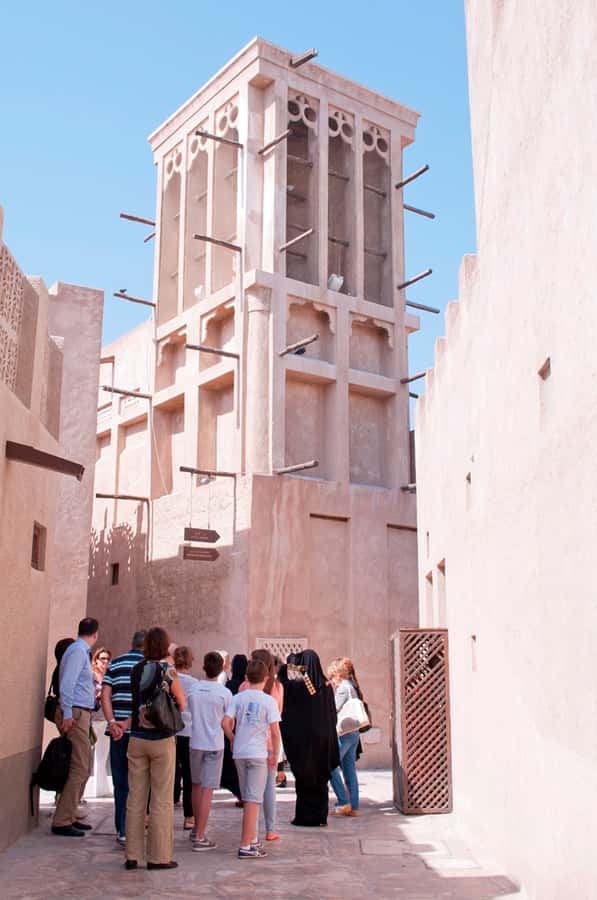
Book it if you want a friendly, focused introduction to Dubai’s older buildings, Emirati hospitality, and Islam. The combination of windtower architecture, mosque access, Arabic coffee, dates, and open questions gives you more substance than a quick photo stop.
At $31, it is a fair buy for cultural context and special access, particularly early in your visit. The 4.8 rating and strong praise for the informative presentation support that choice.
Skip it if your priority is a long walking route through Old Dubai or a packed list of sights. The seated Q&A can take a large part of the tour, and that is either the main attraction or the main drawback, depending on your style.
My advice is simple: book this for understanding, not mileage. If you want to know how Dubai developed and how Emirati customs fit into modern city life, it earns its place in your schedule.
FAQ
Where does the Al Fahidi Heritage Tour meet?
Meet at the Sheikh Mohammed Center for Cultural Understanding, House 26, Al Musallah Road, by the Al Seef roundabout in Bur Dubai. It is beside the Ruler’s Court, near the British Embassy, and just behind the Al Seef roundabout.
How long does the tour last?
The tour lasts 1.5 hours, or 90 minutes.
What language is the tour offered in?
The live guided tour is offered in English.
Is entry to the Ruler’s Court Mosque included?
Yes. Entry to the Ruler’s Court Mosque and the SMCCU is included in the tour.
Is suitable clothing available for the mosque visit?
Yes. The SMCCU provides attire that can be borrowed during the mosque portion of the tour.
Are Arabic coffee and dates included?
Yes. Complimentary Arabic coffee and dates are served at the SMCCU.
Is the tour wheelchair accessible?
Yes. The activity is listed as wheelchair accessible.
Just added around Dubai
- Abu Dhabi City Tour with Ferrari Park★ 5.0 · 15 reviews
- Abu Dhabi City Tour with Ferrari world Full Day★ 4.5 · 11 reviews
- Abu Dhabi City Tour with Ferrari World Tickets★ 5.0 · 16 reviews
- Abu Dhabi City Tour with Buffet Lunch★ 4.5 · 17 reviews
- Abu Dhabi City Tour with Private Car★ 5.0 · 11 reviews
- Abu Dhabi City Tour in a 4×4 Shared Vehicle★ 5.0 · 41 reviews
- Abu Dhabi City Tour with Desert Safari Adventure★ 5.0 · 8 reviews
- Exclusive Full-Day Abu Dhabi City Tour with Sheikh Zayed Mosque★ 5.0 · 38 reviews
Historical Tours, compared.

Dubai Evening Heritage Safari by Vintage G Class Al Marmoom Oasis
Read our review →
Abu Dhabi Grand Mosque, Palace, and Heritage Village
Read our review →
Dubai Camel Desert Safari, Traditional Meal & Heritage Activities
Read our review →
Heritage Safari in Vintage Land Rover with Dinner
Read our review →
Abu Dhabi Trip with Lunch at Al Khayma Heritage Restaurant
Read our review →
Heritage Safari, Camel Ride & Al Marmoom Oasis Dinner
Read our review →Browse the lists this tour appears in