Reviewed · DUBAI TOURS
Dubai: Traditional Emirati Breakfast Experience
The best part of this Emirati breakfast is the setting. You sit in Dubai’s Al Fahidi Historical Neighborhood, surrounded by heritage architecture, while cooks prepare Regag and Djebab bread in front of you. It feels more connected to local food culture than simply ordering a plate in a modern hotel restaurant.
I like the generous mix of sweet and savory dishes, and I like the small hospitality touches: rose water, bakhour, Arabic coffee, dates, and a personalized souvenir. The traditional majlis seating also gives the one-hour meal a clear cultural character.
The main caution is that the live cooking, welcome items, and souvenir may not appear every time. One December booking included none of these promised touches, although the food was still good value and the staff remained warm.
Key points at a glance
- Al Fahidi setting: Eat breakfast in one of Dubai’s most atmospheric heritage neighborhoods.
- Live preparation: Watch Regag and Djebab bread made at cooking stations, when the demonstration is operating.
- A broad Emirati menu: Try Balaleet, Labnah, Shakshouka, hummus, Karak tea, and more in one sitting.
- Majlis hospitality: Arabic coffee, dates, rose water, and traditional seating add cultural context.
- Good price for variety: At $21 per person, the meal offers a lot of small tastes in only one hour.
- Check your expectations: The format can vary, especially for cooking demonstrations and extra keepsakes.
Breakfast in Al Fahidi, not a generic Dubai café
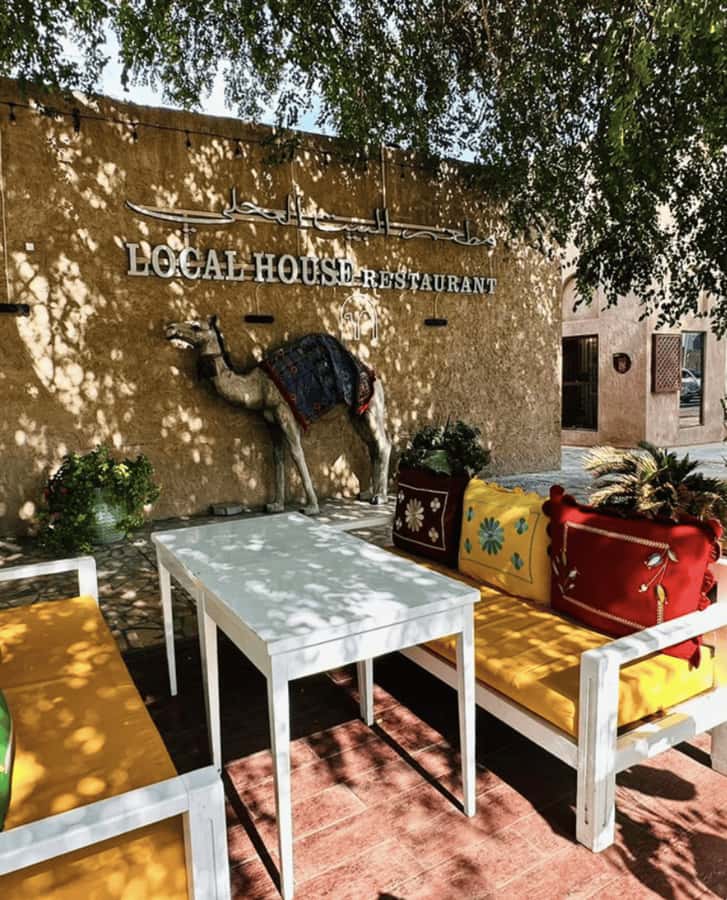
Al Fahidi Historical Neighborhood gives this meal its sense of place. Dubai is often presented through glass towers, shopping malls, and grand hotel dining rooms. Here, you begin the day in an older quarter with heritage architecture and warm, traditional decor.
That change of setting matters. A meal built around Emirati food can feel abstract if you eat it in a polished international restaurant. In Al Fahidi, the majlis setting and surrounding buildings help connect the dishes to local customs and hospitality.
You should plan on about one hour. This is not a long cooking course or a full morning excursion. It is a focused breakfast with a little food preparation, a little cultural presentation, and enough time to sit down and eat without rushing through a standard café order.
The provider is LOCAL HOUSE COFFEE SHOP & RESTAURANT. English, Arabic, Urdu, and Hindi are available from the host or greeter, which is useful for a mixed-language group.
A few more Dubai half-days to weigh up
- Dubai: Burj Khalifa Levels 124 & 125 Entry Ticket + Options
★ 4.3 · 90,891 reviews - Dubai: Desert Safari, Quad Bike, Camel Ride & Al Khayma Camp
★ 4.9 · 68,962 reviews - Dubai: Desert Safari, Quad Bike, Camel Ride and Sandboarding
★ 4.9 · 43,505 reviews
The welcome: rose water, bakhour, and Arabic hospitality
The stated welcome begins with rose water and bakhour. Rose water is a traditional gesture of hospitality, while bakhour, scented smoke made from fragrant materials, sets a distinctly local tone before the food arrives.
These touches take only moments, but they help explain what makes the breakfast different from a tasting menu. Emirati hospitality is not just about feeding you. It is also about how you are received, how the room feels, and the rituals around coffee and conversation.
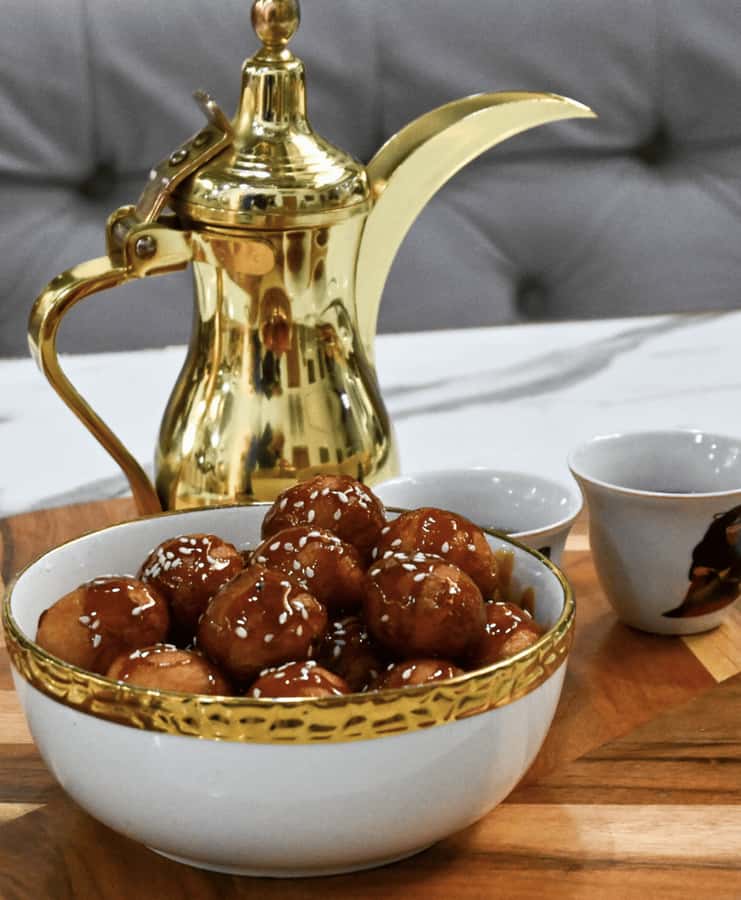
Arabic coffee and dates are included as well. The coffee is generally served in small amounts, so think of it as a social welcome rather than your main caffeine stop. Dates provide a sweet counterpoint to the savory breakfast dishes and are a basic part of Gulf hospitality.
I especially like this sequence because it lets you settle into the place before the food begins. If the welcome is provided as described, it gives you a clearer sense of occasion for the $21 price.
Still, keep the wording flexible in your mind. One booking in December reported no rose water or dates. That does not erase the value of the meal, but it does show that the small extras may depend on staffing or the exact setup that day.
Regag and Djebab at the live cooking stations
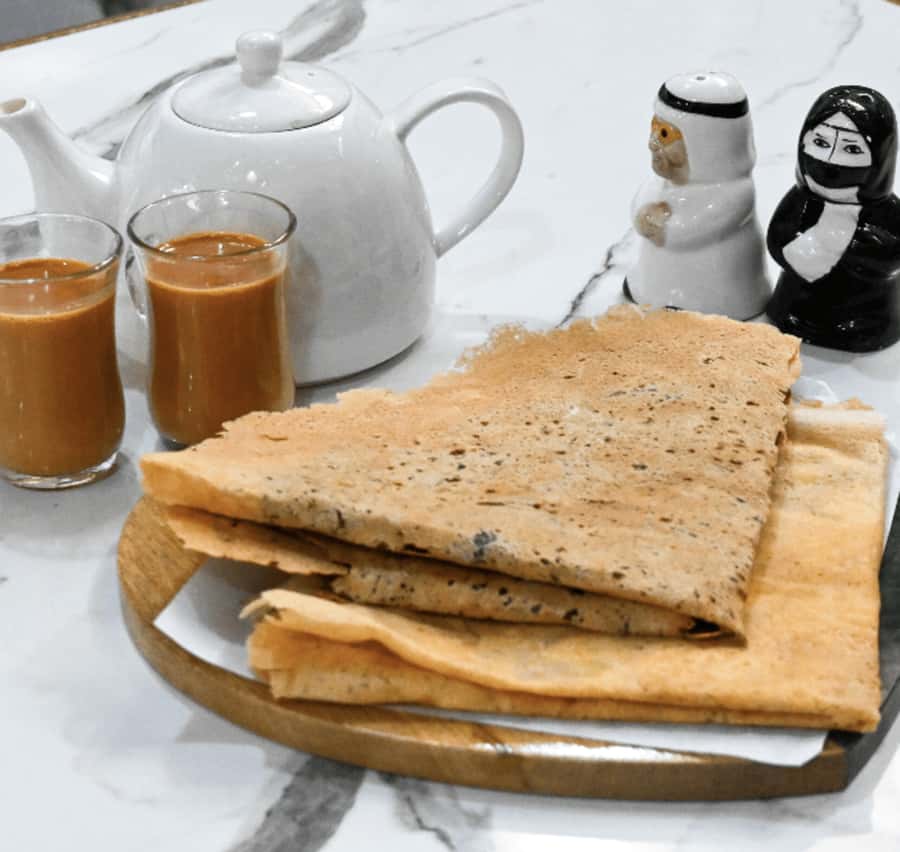
The most interactive part is the preparation of Regag and Djebab. Regag is a thin Emirati flatbread, served here with your choice of cheese, egg, or chips. Djebab bread is another traditional bread preparation included in the breakfast spread.
Watching these items made at a live station gives you something a normal restaurant meal cannot. You see the cooks work with the dough and heat, and you can connect the finished bread to the hands-on side of Emirati cooking.
For many people, this will be the main reason to choose this activity instead of simply visiting a local café. It is brief rather than a formal lesson, so you should expect to watch rather than prepare the dishes yourself.
There is an important qualification. A December booking reported that no cooking demonstration took place, even though the food remained satisfactory. Another booking described some confusion about which dishes were included, suggesting that the format may still be settling into a fixed routine.
I would treat the cooking stations as a valuable feature when available, not as the sole reason to book. If seeing a demonstration is essential to your plans, confirm the day’s arrangement before paying or ask at arrival.
What arrives on the Emirati breakfast table
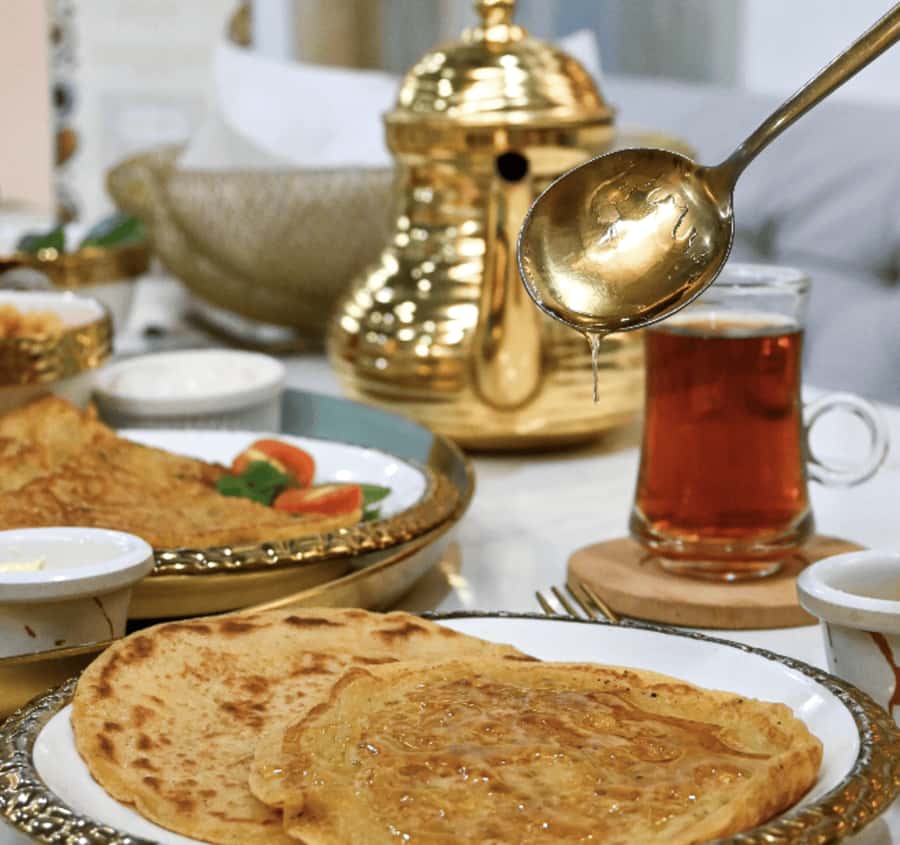
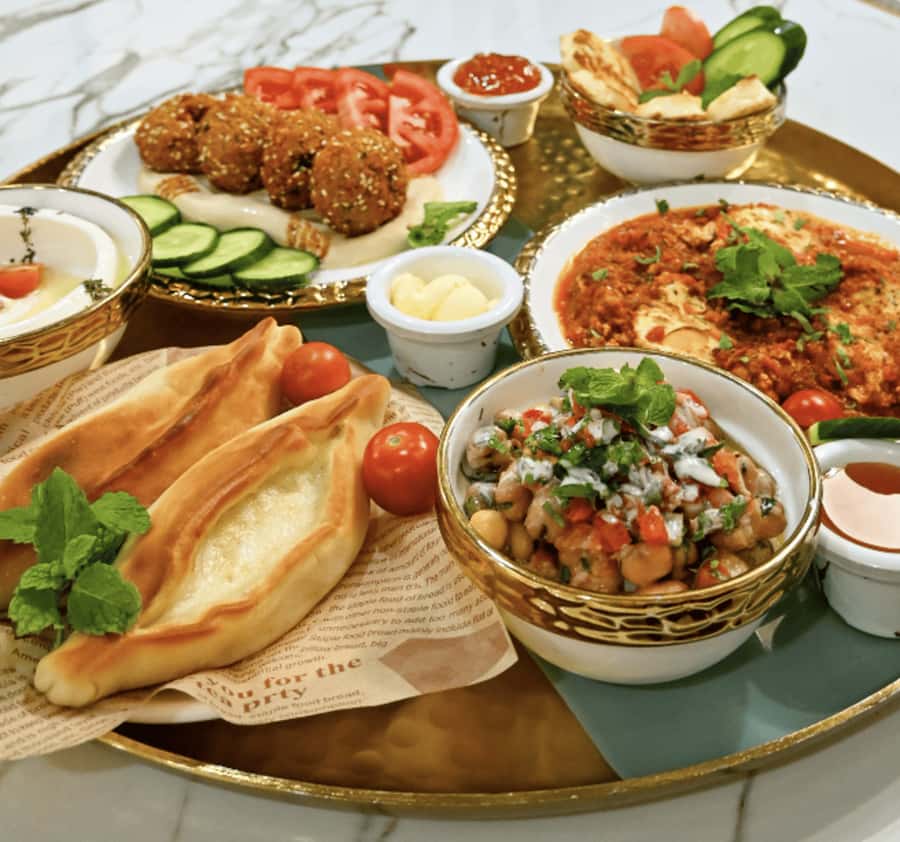
The meal includes several dishes rather than one large entrée. That is a good approach for anyone curious about Emirati flavors because you can sample different textures and combinations in one sitting.
Here is what you can expect:
- Regag: Thin bread served with cheese, egg, or chips.
- Balaleet: A sweet breakfast dish made with vermicelli, a useful contrast to the savory plates.
- Labnah: Thick strained yogurt with a cool, creamy texture.
- Shakshouka: Eggs cooked with a seasoned tomato mixture.
- Hummus: A familiar dip that works well with bread.
- Djebab bread: A traditional Emirati bread prepared at the live station when operating.
- Karak tea: Spiced milk tea commonly enjoyed across the Gulf.
- Arabic coffee and dates: A classic finish or welcome pairing.
The variety is the meal’s strongest food feature. You can move from sweet Balaleet to tangy Labnah, then use Regag or Djebab bread to scoop up hummus and Shakshouka.
The menu also works for a group with different tastes. Someone who prefers mild, creamy foods can stay with Labnah and hummus. Someone looking for stronger breakfast flavors can try Shakshouka, Karak tea, and the bread combinations.
Do not expect a highly refined tasting menu. This is home-style food presented as a cultural breakfast, and the appeal comes from trying several familiar and less familiar items together. One booking described the portions as generous and copious, while another found the amount of food very good for the price.
There has been some uncertainty about the exact selection. A September booking noted confusion over which dishes were included, though the food was considered good. You may receive extra traditional dishes to try, but those extras should be viewed as a pleasant possibility rather than a fixed promise.
Same base, a completely different kind of day:
- Dubai: Safari, Quad Bike, Camel Ride, and Buffet Dinner
★ 4.9 · 33,424 reviews - Dubai: Red Dune Safari, Quad Bike, Camel Ride, BBQ Dinner
★ 4.9 · 32,185 reviews - Dubai: Premium Safari, Camel Ride & Al Khayma Camp 3-Buffets
★ 4.9 · 30,335 reviews - From Dubai: Abu Dhabi Premium Full-Day Sightseeing Tour
★ 4.9 · 26,728 reviews
The majlis makes the meal feel more personal
You may have the option to eat in a traditional Emirati majlis. A majlis is a sitting room arranged for receiving people, sharing food, and talking. The low, comfortable seating and traditional decor offer a different rhythm from a quick breakfast counter.
If you have never experienced a majlis, this is a simple way to encounter one without committing to a long cultural program. You can enjoy the food while noticing how the room is arranged for welcome and conversation.
The setting is also highly photogenic. One booking called the space particularly attractive for photographs, and another praised the atmosphere as part of the reason to return. Take a moment to look around rather than treating the room as a backdrop for a rushed meal.
Service is another strong point when the team is fully engaged. Alok is named as a warm host in one account, while Aiok and Saeed were praised for their attentive care during a family visit. When rain arrived, they helped move the group indoors so breakfast could continue comfortably.
That story also mentions dessert and a house tour after the meal. These extras are not listed as standard inclusions, so I would not book specifically for them. If they are offered during your visit, consider them a welcome bonus.
Is $21 good value in Dubai?
At $21 per person, the price is reasonable for a one-hour breakfast with several dishes, Arabic coffee, dates, live preparation, and a heritage setting. Dubai can be expensive, especially in central areas and hotel restaurants, so a broad local meal at this price has real appeal.
The value depends on what you want from the outing. If you mainly want a filling breakfast, the generous portions and range of dishes make the cost easy to justify. If you want a full cooking class with hands-on instruction, the price is attractive but the activity may not meet that expectation.
The meal also gives you a chance to try dishes you might not order separately. Balaleet, Djebab bread, and Regag can be unfamiliar if this is your first introduction to Emirati food. Sampling them beside hummus, Labnah, and Shakshouka makes the experience approachable.
The weak point is consistency. If you arrive expecting every listed welcome detail, live station, and souvenir, a reduced format could feel disappointing. The food itself appears to be the safest part of the purchase, while the added presentation elements require a little flexibility.
Who will enjoy this breakfast most?
I would recommend this for first-time visitors to Dubai who want to look beyond the city’s modern image. It gives you a short and manageable introduction to local food, hospitality, and traditional seating without taking half a day.
Families should find the format easy to handle. The broad selection allows different preferences, and the one-hour duration is less demanding than a long food tour. The personalized souvenir can also make the visit more memorable for children, though you should confirm that it is being prepared during your visit.
Food-curious visitors will get the most from the meal. You can ask about the dishes as they arrive, compare the sweet and savory flavors, and watch the breads being prepared if the stations are active.
This may not suit you if you want a detailed cooking lesson. The activity offers live preparation, not a guaranteed hands-on class. It may also disappoint if your priority is a large, formal restaurant breakfast with a fixed menu and polished service at every step.
The language range is helpful for international groups. Hosts or greeters may speak English, Arabic, Urdu, or Hindi. The activity is listed as wheelchair accessible, which makes it a practical option for many visitors, though the exact seating arrangement may still be worth checking before arrival.
Smoking indoors is not allowed.
Timing, flexibility, and what to clarify
The listed duration is one hour, so arrive ready for a compact meal rather than an open-ended visit. Starting times depend on availability, and you should check the available slot that fits your plans.
The activity offers free cancellation up to 24 hours in advance for a full refund. You can also reserve now and pay later, which helps if your Dubai schedule is still changing.
I would clarify three things if your expectations are very specific:
- Is the live cooking station operating on your chosen date?
- Are rose water, dates, and the personalized souvenir included that day?
- Will the meal use majlis seating, or another seating area?
These questions are not meant to undermine the experience. They simply reflect the difference between the planned format and what one booking actually received. The strongest accounts praised the food, generous selection, atmosphere, and warm service. The critical account still found the meal fairly priced and the staff welcoming, but felt the promised extras were missing.
My verdict: a worthwhile local breakfast with one caveat
I would book this if you want a short, affordable introduction to Emirati food in a setting with real cultural character. The combination of Regag, Balaleet, Labnah, Shakshouka, Djebab bread, Karak tea, Arabic coffee, and dates gives you a lot to sample for $21.
The warm service and generous variety are the safest reasons to choose it. The Al Fahidi location and majlis setting add more value than the food alone, especially for a first visit to Dubai.
Book with realistic expectations about the demonstrations and extras. The cooking stations, rose water, souvenir, and possible house tour may not be consistent every time. If you can accept that small uncertainty, this is a pleasant way to spend an hour and taste several Emirati breakfast staples without a major time or budget commitment.
FAQ
Where does the Emirati breakfast take place?
It takes place in the Al Fahidi Historical Neighborhood in Dubai, surrounded by heritage architecture and traditional decor.
How long does the experience last?
The breakfast experience lasts one hour.
What food is included?
The meal includes Regag with a choice of cheese, egg, or chips, Balaleet, Labnah, Shakshouka, hummus, Djebab bread, and Karak tea. Arabic coffee and dates are also included.
Can I watch the food being prepared?
Live cooking stations for Regag and Djebab are part of the activity. However, one booking reported that no cooking demonstration was available, so the demonstration may not operate every time.
Is Arabic coffee included?
Yes. Arabic coffee and dates are included as part of the Emirati hospitality experience.
Is seating available in a traditional majlis?
You may have the option to enjoy breakfast in a traditional Emirati majlis seating area.
What languages are available?
The host or greeter may speak English, Arabic, Urdu, or Hindi.
Is the activity wheelchair accessible?
Yes, the activity is listed as wheelchair accessible. Smoking indoors is not allowed.
Just added around Dubai
- Abu Dhabi City Tour with Ferrari Park★ 5.0 · 15 reviews
- Abu Dhabi City Tour with Ferrari world Full Day★ 4.5 · 11 reviews
- Abu Dhabi City Tour with Ferrari World Tickets★ 5.0 · 16 reviews
- Abu Dhabi City Tour with Private Car★ 5.0 · 11 reviews
- Abu Dhabi City Tour with Buffet Lunch★ 4.5 · 17 reviews
- Abu Dhabi City Tour in a 4×4 Shared Vehicle★ 5.0 · 41 reviews
- Abu Dhabi City Tour with Desert Safari Adventure★ 5.0 · 8 reviews
- Exclusive Full-Day Abu Dhabi City Tour with Sheikh Zayed Mosque★ 5.0 · 38 reviews
Dubai Tours, compared.
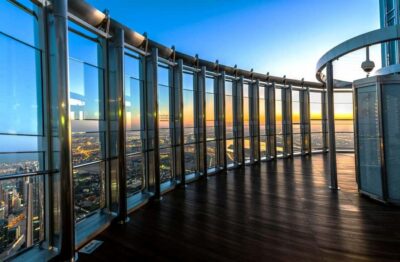
Burj Khalifa Levels 124 & 125 Entry Ticket + Options
Read our review →
Desert Safari, Quad Bike, Camel Ride & Al Khayma Camp
Read our review →
Safari, Quad Bike, Camel Ride, and Buffet Dinner
Read our review →
Red Dune Safari, Quad Bike, Camel Ride, BBQ Dinner
Read our review →
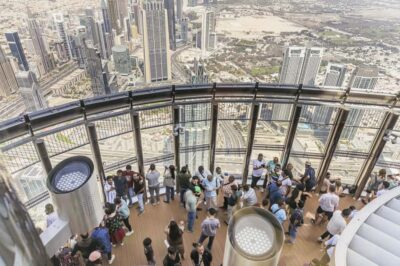
Burj Khalifa Sky Level 148, 124, & 125 Entry Ticket
Read our review →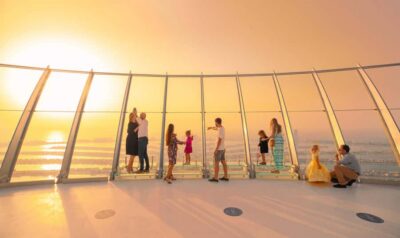
The View At The Palm Observatory Entry Ticket
Read our review →