
Reviewed · HISTORICAL TOURS
Old Dubai Historic Guided Tour: Creek, Street Food & Souks
Old Dubai reveals itself in small details: a cup of Arabic coffee, a shaded alley, a wooden trading boat, and the sharp scent of cardamom drifting from a souk stall. This three to four-hour walking tour links those details into a clear story, from an Emirati heritage house to the Creek and the Gold Souk.
I like the food stops, which include dates, Arabic coffee, karak tea, and samosas, and I like the simple abra ride across Dubai Creek. At $10 per person, the tour packs in a great deal, though the walking, heat, narrow lanes, and lack of wheelchair access make it unsuitable for some people.
Key points at a glance
- Begin with Emirati coffee and dates inside a traditional heritage house, where old photographs explain the country’s past.
- Walk through Al Fahidi and Al Seef to see old-style buildings, mosque views, and newer waterfront development side by side.
- Taste local snacks along the way, including karak tea, samosas, dates, Arabic coffee, and, on some tours, luqaimat or camel-milk chai.
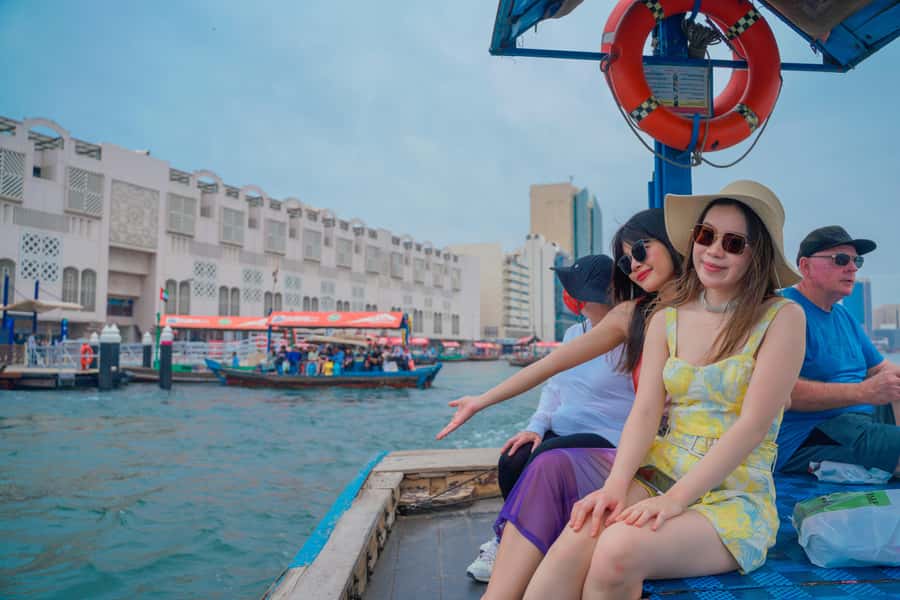
- Ride a traditional abra on Dubai Creek and watch trading ships pass beneath the modern Dubai skyline.
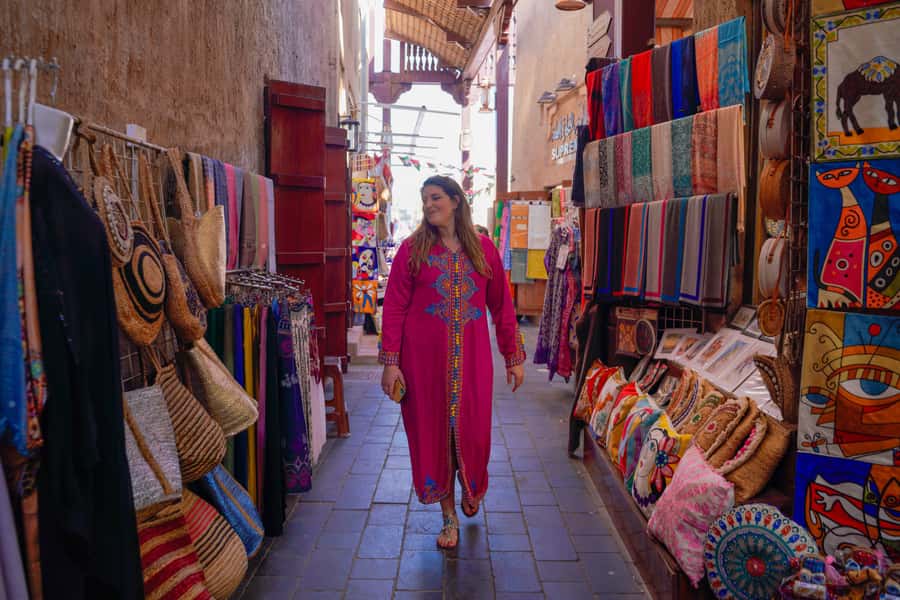
- Finish in the Spice and Gold Souks, with time to smell spices, inspect jewelry, and practice bargaining.
- Choose your guide language carefully, with English, German, Spanish, Italian, and French options available.
Why Old Dubai makes a better first stop than another skyscraper
Dubai is famous for glass towers, shopping malls, and grand engineering. Those sights are real, but they tell only the newest part of the story. In Old Dubai, you get a more human sense of the place: how people lived, traded, traveled, cooked, and built homes before the city became a global business center.
The tour begins at Al Khayma Heritage Restaurant, near Sharaf DG Metro Station. That starting point matters. You are not being dropped into a random street corner and left to find the group. You start in a place designed around Emirati culture, with a guide who can set the scene before the walking begins.
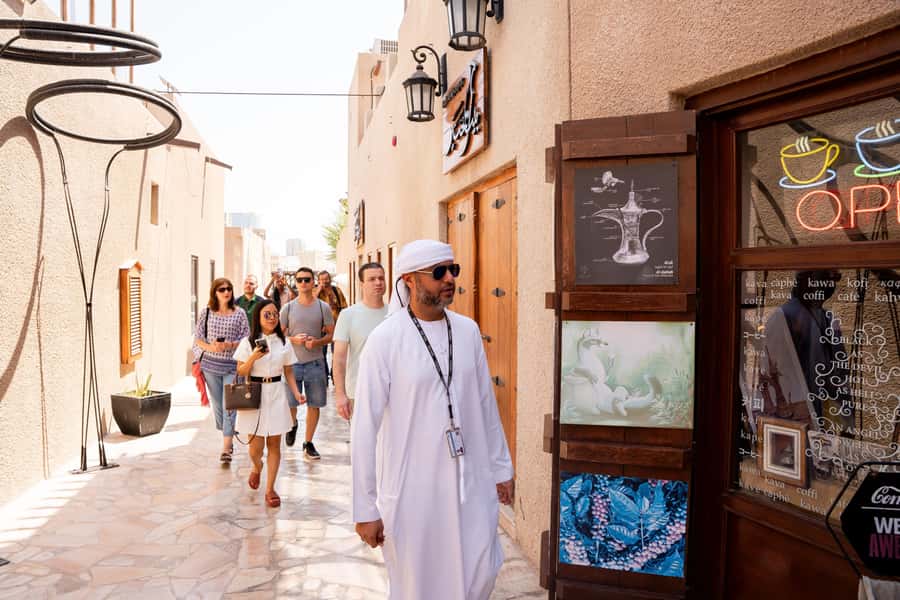
The guides are a major part of the experience. Names attached to this tour include Ahmed Hussein, Nasser, Ibrahim, Khan, Hossam, Maaz, Dago, and Mustafa. Their styles differ, but the strongest theme is clear: you should expect a guide who explains local customs and the growth of the UAE in plain language, while making time for questions.
That is especially useful in Dubai, where the old and new can seem disconnected. A good guide helps you understand why a low house, a trading boat, a mosque, or a spice stall matters instead of treating each stop as a quick photo opportunity.
More food tours in Dubai:
- Dubai: Old Town, Creek, Museums, Souks, & Street Food Tour
★ 4.8 · 10,816 reviews - Dubai: Old Town, Souks, Street Food, Guided Tour & Abra Ride
★ 4.9 · 7,170 reviews - Dubai: Old Town, Souks, Street Food, Guided Tour & Abra Ride
★ 5.0 · 1,664 reviews
Coffee, dates, and photographs inside an Emirati house
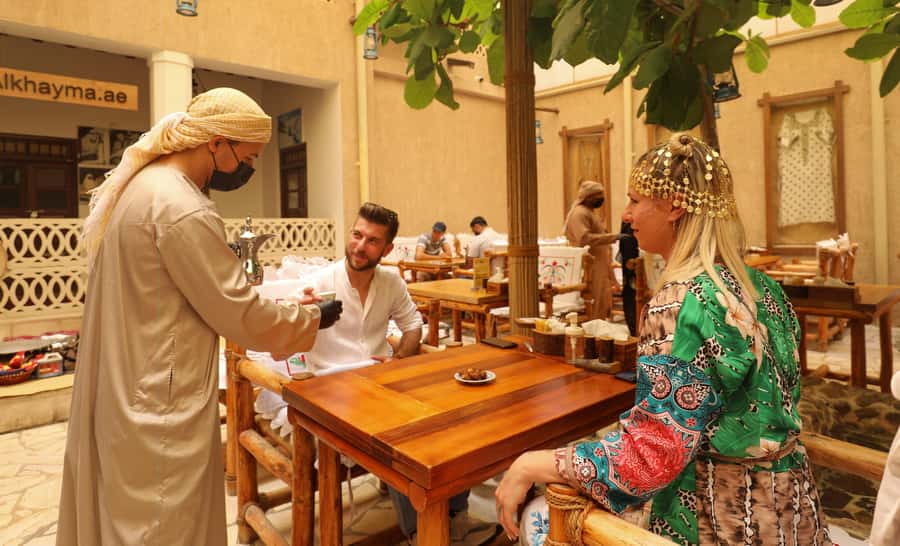
Your first substantial stop is a traditional Emirati heritage house at Al Khayma Heritage Restaurant. Plan on about 30 minutes here for Arabic coffee, tea, local snacks, and an indoor look at the building.
Arabic coffee is usually served in small cups, often with dates. Here, the tasting is more than a welcome drink. It gives your guide a natural opening to explain hospitality, food customs, and everyday life in the Emirates. Some past tour descriptions also include two varieties of Arabic coffee, luqaimat, and chai made with camel’s milk, though the exact tasting selection may vary.
Inside the house, photographs help explain the UAE before the oil boom and rapid urban growth. This is one of the more valuable parts of the tour because it gives faces and personal stories to a subject that can otherwise feel like a list of dates and development projects.
Take your time looking at the structure itself. A heritage house is not simply an old building preserved for decoration. Its layout can show how family space, shade, privacy, and hospitality shaped traditional homes.
The stop is also a practical chance to drink water and settle into the pace of the outing. Bring your own bottle if you like, though a bottle of water is included.
Al Seef and Al Fahidi, where old forms meet new Dubai
From the heritage house, the route moves toward Al Seef, with around 30 minutes for walking and sightseeing. Al Seef presents an updated version of Old Dubai, with traditional-looking facades, waterfront paths, shops, and restaurants arranged along the Creek.
The area can feel polished compared with Al Fahidi, but that contrast is part of the point. You see how Dubai uses older architectural forms and Creek-side commerce in a modern setting. The tour includes a photo stop at Al Seef Mosque, so have your camera ready, but listen to the explanation too. The building is part of the visual transition between heritage districts and the newer waterfront.
The walk continues into Al Fahidi, one of the most atmospheric parts of the route. Narrow lanes lead between traditional buildings, many with wind towers and shaded courtyards. The contrast with modern structures nearby makes Dubai’s growth easy to grasp without a long lecture.
This is a walking tour, not a bus tour with brief exits. You will use your feet on uneven streets and through crowded market areas. Comfortable shoes are essential. Sunglasses, a sun hat, and light, comfortable clothing will make the afternoon easier, especially outside the cooler months.
At roughly 15 minutes, the Al Fahidi Fort stop is brief. It is mainly a guided sightseeing and photo stop, so do not expect a long museum visit there. The value comes from seeing the fort within the wider old district and connecting it to the city’s earlier defensive and civic life.
Bur Dubai Souk and the first taste of local street food
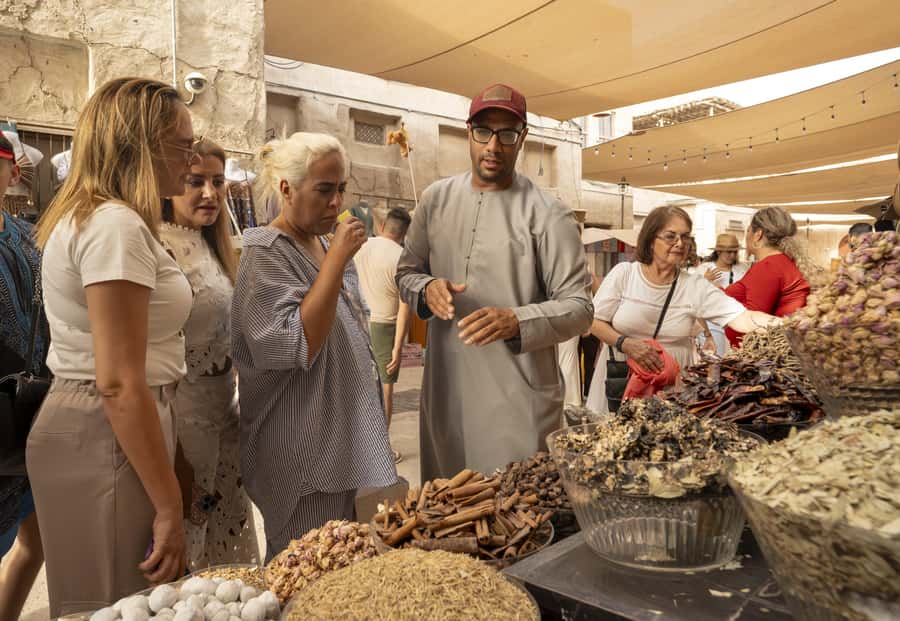
The Bur Dubai Souk area follows, with another short stop for sightseeing and photographs. This is a good place to notice the difference between a market designed for local trade and a retail center aimed at luxury shopping.
Your guide will point out details you might pass without context, then lead you toward a street-food tasting. Karak tea and samosas are listed as part of the experience. The tea is sweet, milky, and strongly spiced, while the samosa offers a crisp, savory snack that works well during a walking route.
Food is one of the tour’s strongest features because it gives you something to remember beyond buildings. A small tasting will not replace a full meal, but the tour describes the food as plentiful enough for many people to find it satisfying. If you have a large appetite, treat it as a series of snacks rather than a guaranteed lunch or dinner.
The food may vary slightly. One account of the experience also refers to dates, luqaimat, Arabic tea, and camel-milk chai. Consider these welcome additions rather than fixed promises beyond the listed coffee, tea, dates, and samosa tasting.
Same base, a completely different kind of day:
- Dubai: Burj Khalifa Levels 124 & 125 Entry Ticket + Options
★ 4.3 · 90,891 reviews - Dubai: Desert Safari, Quad Bike, Camel Ride & Al Khayma Camp
★ 4.9 · 68,962 reviews - Dubai: Desert Safari, Quad Bike, Camel Ride and Sandboarding
★ 4.9 · 43,505 reviews - Dubai: Safari, Quad Bike, Camel Ride, and Buffet Dinner
★ 4.9 · 33,424 reviews
The abra ride across Dubai Creek
At Bur Dubai Abra Dock, you get a short traditional boat ride, listed at around 15 minutes. An abra is a small wooden Creek boat used as a local water taxi. The ride is simple, inexpensive in spirit, and far more connected to daily Dubai than a grand sightseeing cruise.
From the water, the city’s story comes together. You can see the Creek as a working waterway, with large trading ships and modern towers sharing the same view. The ride also gives your feet a break after the lanes and souk streets.
The exact wording of the route describes a ride along the Creek and a crossing to the Deira side. You should expect a short scenic crossing rather than an extended cruise. This is one of the tour’s most memorable moments, but it is also a practical transfer between the Bur Dubai and Deira areas.
At Dubai Creek, there is time for photographs, a guided look at the waterway, and more sightseeing. The Creek is central to understanding why Dubai developed here. Trade, transport, and waterfront access shaped the old districts long before the skyline became the city’s calling card.
Spice Souk, a sensory stop with room for bargaining
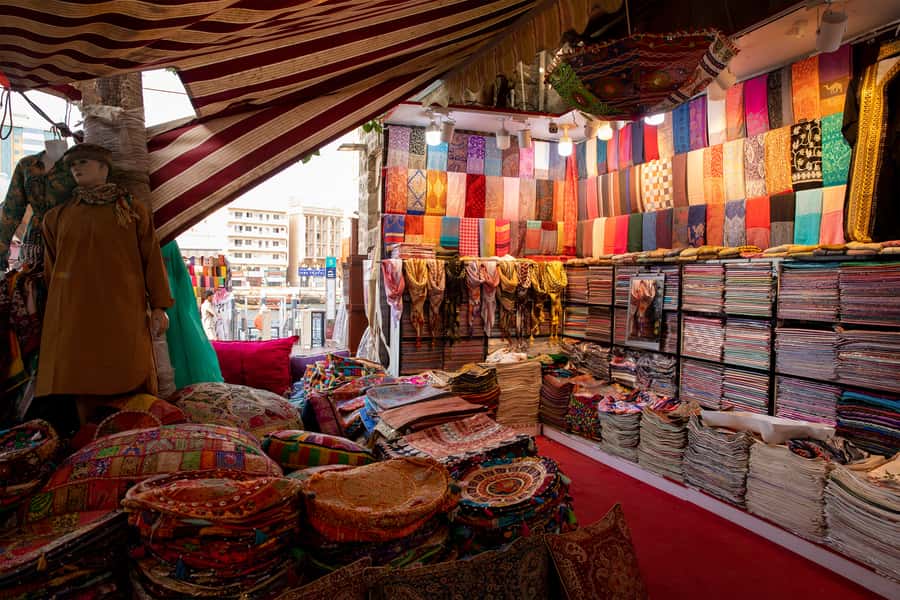
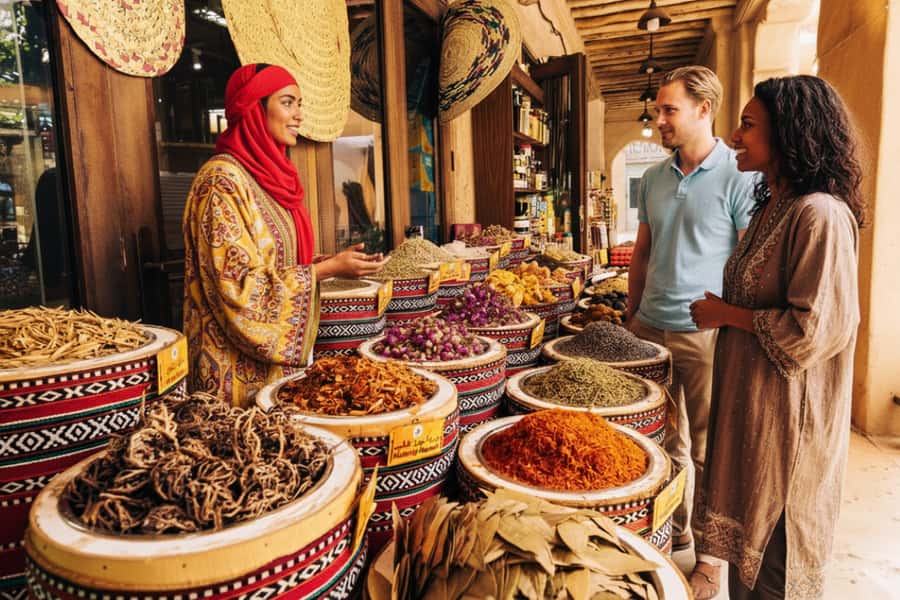
The Spice Souk receives about 30 minutes, enough for a guided walk, photographs, and shopping. The first thing you notice is likely the smell. Sacks and displays of spices create an easy way to talk about the trade routes and cooking traditions that brought people and goods through Dubai.
Look closely at the colors and textures, but keep your buying decisions measured. Market sellers are friendly and expect conversation. Bargaining is part of the experience, and your guide may offer tips on how to negotiate a reasonable price.
I would not treat the first price as the final price. Ask what you are buying, check the quantity, and compare at least one or two stalls if you have time. The guide can help you understand the rhythm of the exchange, but you remain responsible for deciding what to purchase.
The 30-minute stop is short enough to prevent the market from taking over your day, but it may feel rushed if you want to browse every display. If shopping is your main reason for visiting the souks, plan to return on your own.
Gold Souk, a glittering finish with a sales pitch
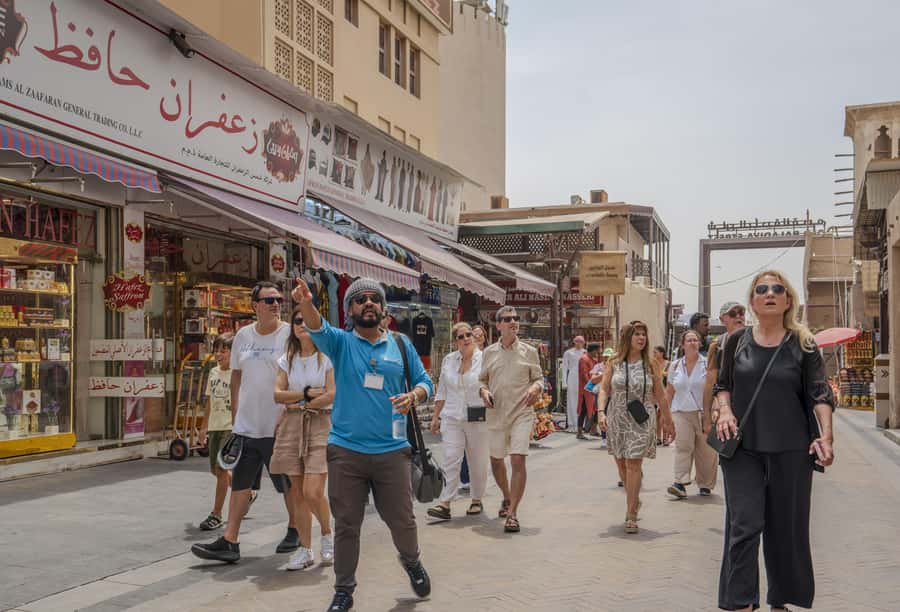
The final major stop is the Gold Souk, with approximately 30 minutes for guided sightseeing and walking. Storefronts display gold jewelry and precious stones in quantities that can feel startling, especially after the modest lanes of Al Fahidi.
You do not need to buy anything to enjoy this stop. The Gold Souk is an impressive example of Dubai’s commercial confidence, and the contrast with the heritage house at the beginning gives the tour a satisfying arc.
If you shop, ask questions and compare prices. Gold pricing can involve the weight, purity, craftsmanship, and daily market rate, so a large display does not automatically mean a bargain. The tour gives you a chance to practice bargaining, but it is not a formal jewelry-buying service.
The route finishes in or around the Gold Souk area. One practical point is easy to miss: you may need to make your own way back afterward. The itinerary lists Dubai as the return destination, but the supplied details indicate that the tour can finish at the Gold Souk, with the abra serving as a way to return toward the original side of the Creek. Confirm the exact end point when booking.
What $10 really buys you
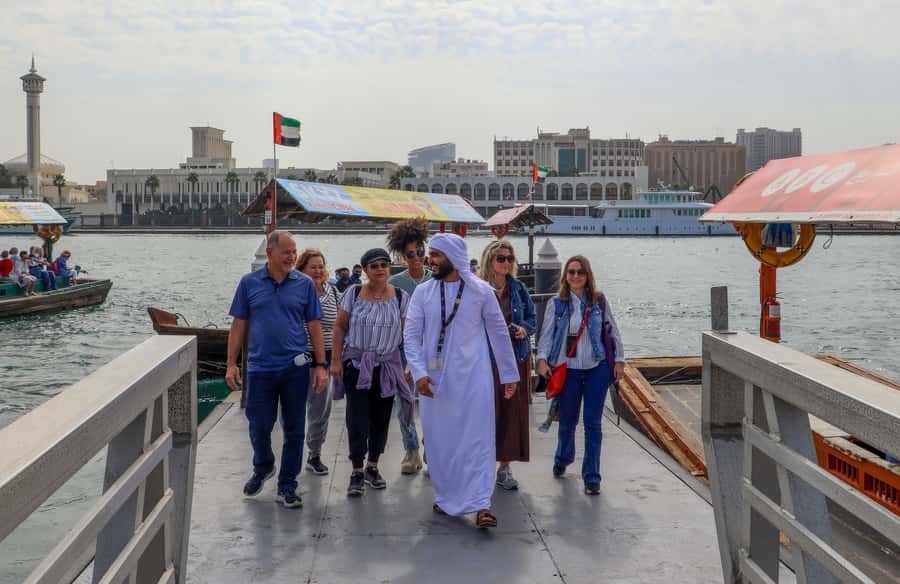
At $10 per person, this is unusually good value if you want a guided introduction to Old Dubai. The price includes the guide, entry to heritage sites and museums, the Emirati heritage house, Arabic tea or coffee, dates, a street-food tasting, a bottle of water, the abra ride, and visits to both major souks.
You are also paying for interpretation. Without a guide, you can walk through Al Fahidi, cross the Creek, and browse the markets, but you may miss the links between them. The guide turns separate stops into a story about home life, trade, food, migration, and rapid development.
Hotel pickup and drop-off from central Dubai hotels are optional, which can make the tour easier if you do not want to navigate the metro. If you use public transport, Sharaf DG Metro Station is the nearest station to the meeting point at Al Khayma Heritage Restaurant.
The low price does come with limits. This is a shared walking experience rather than a private custom tour. Stop times are fairly tight, and the focus is on seeing several places rather than spending a long time in one museum or souk.
Timing, clothing, and who should skip it
The tour lasts three to four hours, with starting times that depend on availability. A 5:00 PM evening departure has one specific limitation: the Coffee Museum cannot be visited at that time.
The route is not suitable for children under two, infants, people with mobility impairments, or wheelchair users. Baby strollers, luggage, and large bags are not allowed. That last rule is especially sensible in narrow market lanes, but it means you should arrange storage before arriving.
Wear comfortable shoes and clothes. Bring sunglasses and a sun hat. The route includes outdoor walking, pavement, market passages, and time near the water. Dubai’s heat can make a short walk feel much longer, so do not judge the tour only by its three-hour duration.
I would recommend it most strongly for first-time visitors, people with a short Dubai stopover, and anyone staying near the older districts. It also suits repeat visitors who have seen the modern city but never made time for its older neighborhoods. One person who had visited Dubai many times for work found that the tour finally gave the city a clearer sense of place.
It is less suitable if you want luxury transport, a private guide, a long restaurant meal, or a slow shopping session. It is also not the right choice if you have difficulty walking or need step-free access.
Language options and guide quality
You can book the experience with a live guide speaking English, German, Spanish, Italian, or French. If language comfort matters, select the option carefully rather than assuming every departure offers every language.
The individual guides named in the tour information include Ahmed Hussein, Nasser, Ibrahim, Khan, Hossam, Maaz, Dago, Mustafa, Fesal, and Iqbal. Specific praise has focused on clear explanations, humor, patience, and help with market bargaining. Maaz, for example, is noted for speaking clearly and slowly to a group with several nationalities. Ibrahim has led Spanish-language tours, while Ahmed Hussein is repeatedly associated with careful attention to the whole group.
That detail matters because the quality of a history walk depends heavily on delivery. A guide who welcomes questions can make the difference between a pleasant stroll and a useful lesson about Dubai.
Should you book this Old Dubai tour?
I would book it if you want maximum cultural value for a very small price. The combination of coffee, snacks, a heritage house, Al Fahidi lanes, the Creek, an abra crossing, and both souks gives you a strong introduction to Dubai beyond the towers.
Book with realistic expectations. You will walk, share the experience with others, and have limited time at each stop. The Gold and Spice Souks are included for browsing, not for an unhurried shopping expedition.
The tour is at its best when you treat the market visits as part of a larger story. Come for the food and boat ride, stay curious about the old houses and trade routes, and let the guide connect the pieces. For most able walkers, $10 is an easy call.
FAQ
How long does the Old Dubai Historic Guided Tour last?
The tour lasts approximately three to four hours. Starting times depend on availability.
Where does the tour meet?
The standard meeting point is Al Khayma Heritage Restaurant. The nearest metro station is Sharaf DG Metro Station. Optional hotel pickup and drop-off are available from central hotels in Dubai.
Is the abra ride included?
Yes. A traditional abra boat ride along and across Dubai Creek is included in the tour.
What food and drinks are included?
The experience includes Arabic tea or coffee, dates, and street food consisting of karak tea and samosas. Some descriptions also mention luqaimat and camel-milk chai as part of the tastings.
Which languages are available?
Live guides are available in English, German, Spanish, Italian, and French.
Is the tour suitable for wheelchair users or infants?
No. The tour is not suitable for wheelchair users, people with mobility impairments, children under two, or infants. Baby strollers, luggage, and large bags are not allowed.
More Historical Tours in Dubai
- Dubai Evening Heritage Safari by Vintage G Class Al Marmoom Oasis
★ 5.0 · 1,500 reviews - Dubai: Abu Dhabi Grand Mosque, Palace, and Heritage Village
★ 4.8 · 1,265 reviews - Dubai Camel Desert Safari, Traditional Meal & Heritage Activities
★ 5.0 · 937 reviews - Dubai: Heritage Safari in Vintage Land Rover with Dinner
★ 4.8 · 861 reviews
Just added around Dubai
- Abu Dhabi City Tour with Ferrari Park★ 5.0 · 15 reviews
- Abu Dhabi City Tour with Ferrari world Full Day★ 4.5 · 11 reviews
- Abu Dhabi City Tour with Ferrari World Tickets★ 5.0 · 16 reviews
- Abu Dhabi City Tour with Buffet Lunch★ 4.5 · 17 reviews
- Abu Dhabi City Tour with Private Car★ 5.0 · 11 reviews
- Abu Dhabi City Tour in a 4×4 Shared Vehicle★ 5.0 · 41 reviews
- Abu Dhabi City Tour with Desert Safari Adventure★ 5.0 · 8 reviews
- Exclusive Full-Day Abu Dhabi City Tour with Sheikh Zayed Mosque★ 5.0 · 38 reviews
Historical Tours, compared.
Dubai Evening Heritage Safari by Vintage G Class Al Marmoom Oasis
Read our review →
Abu Dhabi Grand Mosque, Palace, and Heritage Village
Read our review →
Dubai Camel Desert Safari, Traditional Meal & Heritage Activities
Read our review →
Heritage Safari in Vintage Land Rover with Dinner
Read our review →
Abu Dhabi Trip with Lunch at Al Khayma Heritage Restaurant
Read our review →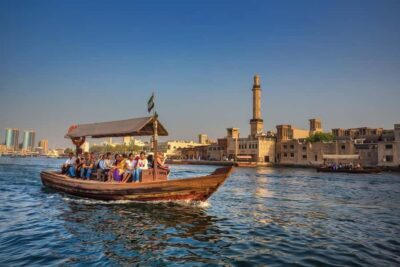
Heritage Safari, Camel Ride & Al Marmoom Oasis Dinner
Read our review →Browse the lists this tour appears in