
Reviewed · RAS AL KHAIMAH TOURS
Ras al-Khaimah: House Of Pearls Tour
A traditional boat carries you from Al Rams Marina through quiet mangroves to a simple solar-powered pearl farm, where the story of Ras Al Khaimah’s oldest trade comes alive. You’ll see how oysters are opened, how pearls form, and how local families once worked at sea for months at a time. Guides such as Taqi, Obaid, Bilal, and Othman Alblooshi have been praised for making the subject easy to follow for both children and adults.
I like the boat ride through the mangroves and the honest, hands-on look at pearl work. I also like the live oyster opening, where there is only a 60 percent chance of finding a pearl. The main drawback is getting there: transportation is not provided, and first-time visitors to Ras Al Khaimah may find Al Rams Marina hard to locate.
Key points to know before you go
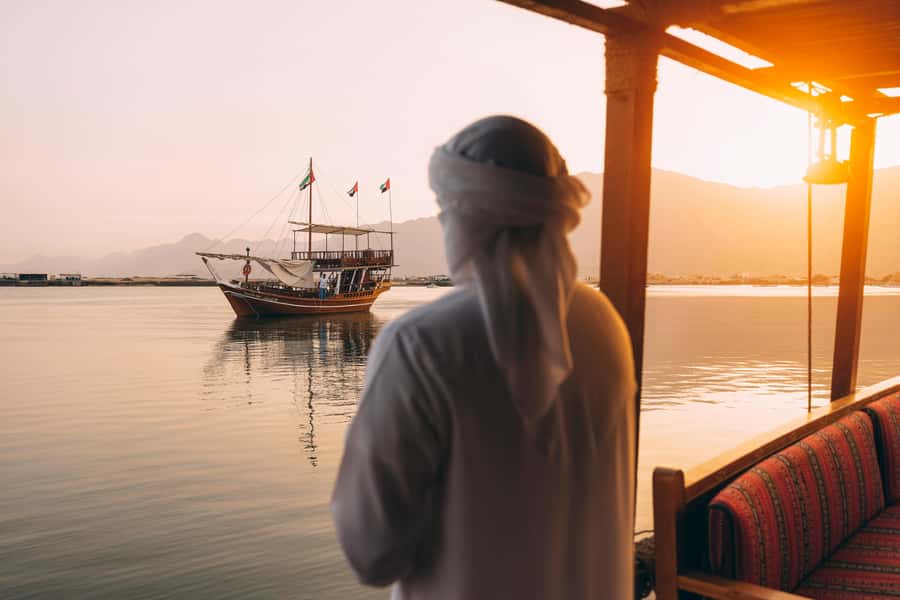
- A traditional boat starts the story: You leave from Al Rams Marina, an old fishermen’s village, and ride across calm water toward the House of Pearls.
- The live oyster opening is the highlight: You watch an oyster being opened and learn why finding a natural pearl is never guaranteed.
- The guide makes the difference: English and Arabic guides, including Taqi, Obaid, Bilal, and Othman Alblooshi, have been praised for clear explanations and lively storytelling.
- Mangroves and mountain views add variety: The water journey includes mangroves, coastal scenery, and, on some departures, camels bathing in the sea.
- The setting is deliberately simple: The farm uses solar power and environmentally friendly systems, with a basic farmhouse feel rather than a polished museum.
- Pearls cost extra: If you find a pearl and want to keep it, the additional charge is AED 450 plus 5 percent. Oysters and pearls are not included in the tour price.
Why Ras Al Khaimah’s pearls matter
Before oil transformed the Gulf, pearl gathering shaped coastal life across the United Arab Emirates. It was not a small side trade. It connected boat builders, sailors, merchants, oyster workers, and families who prepared supplies for long periods at sea.
This tour gives that story a local setting. Instead of viewing pearl jewelry in a shop window, you see the tools and routines behind it. The guide explains the work of traditional Arabian pearl divers, the methods they used, and the risks tied to the sea.
That context is what makes the visit worthwhile. A pearl is easy to admire as a finished object. It is harder to imagine the patience, skill, and uncertainty involved in finding one. The House of Pearls helps connect the polished stone with the people who sought, traded, and cared for it.
The story also covers the change from natural pearls to cultured pearls. You learn how oysters and pearls form, then see how modern knowledge and farming techniques have changed the industry. This is not only a history talk. It is also a basic science lesson, presented in a setting where the subject feels practical rather than academic.
A few more Ras Al Khaimah half-days to weigh up
- Ras Al Khaimah: Afternoon Desert Safari and BBQ Dinner
★ 4.4 · 558 reviews - Evening Desert Dune Bashing by 4*4 Vehicle
★ 4.6 · 270 reviews - Parasailing
★ 5.0 · 186 reviews
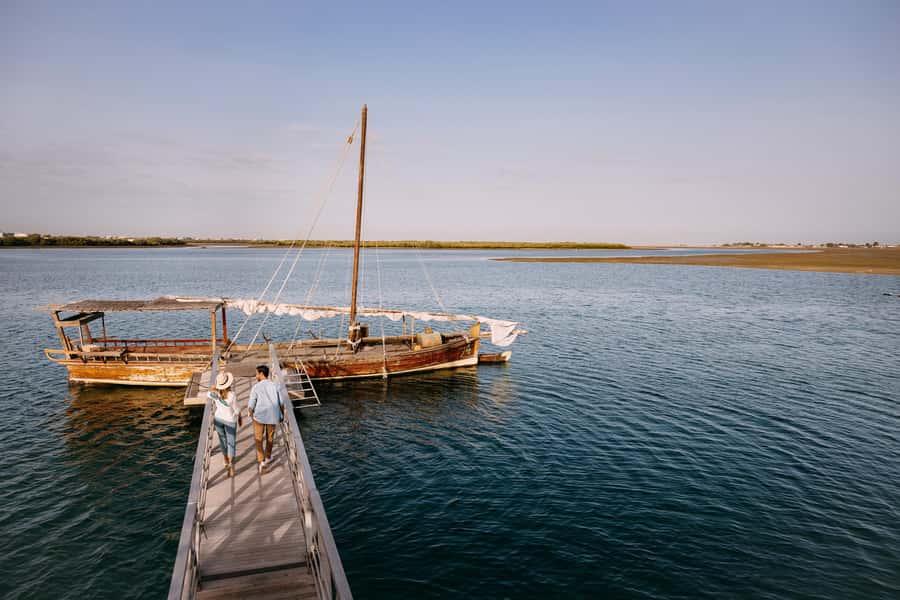
Leaving Al Rams Marina by traditional boat
Arrive at Suwaidi Pearls at least 15 minutes before the scheduled start. The departure point is Al Rams Marina, described as an old fishermen’s village. Since no pickup service is included, allow extra time to find the marina, especially if this is your first visit to Ras Al Khaimah.
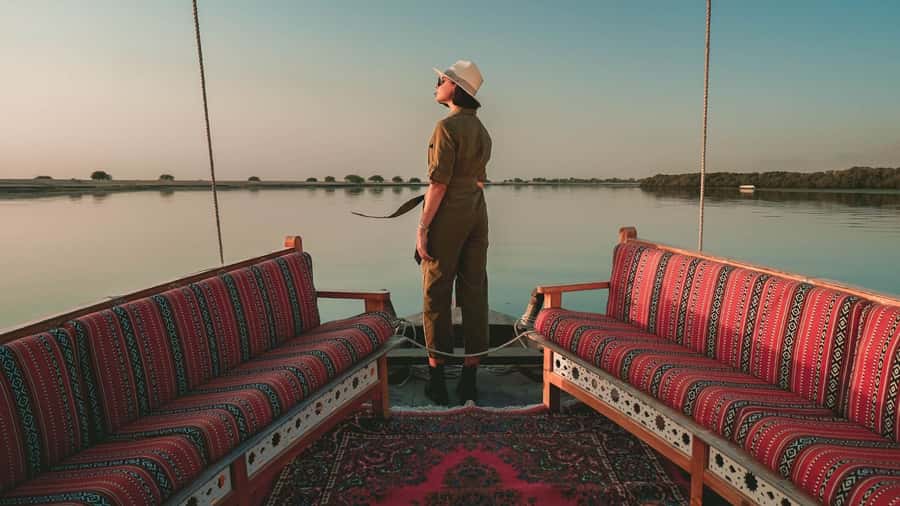
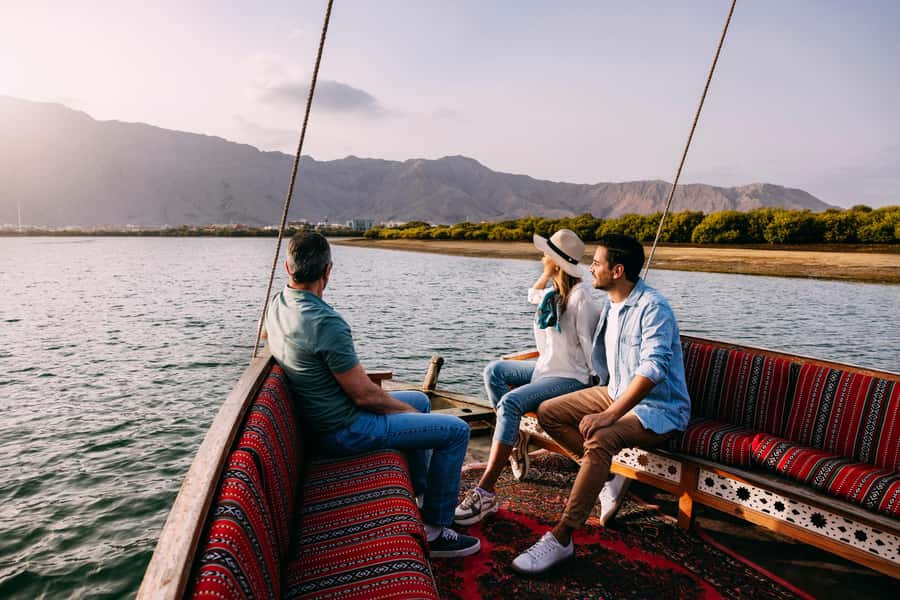
The boat ride is an important part of the experience, not just transport. You travel by a traditional pearl divers’ boat toward the House of Pearls, with the shoreline and mangroves around you. The water is generally calm, and one family reported that even a person prone to motion sickness found the trip comfortable.
You may see mangroves, mountain views, and coastal scenes along the way. One account also describes camels bathing in the sea, an unexpected detail that makes the journey feel distinctly local. The scenery is not the main event, but it gives the tour breathing room before the indoor explanations begin.
A later departure can be appealing. The 3 p.m. tour may catch sunset on the return trip, adding warm evening light to the boat ride. Starting times vary, so check availability when booking rather than assuming the afternoon option is offered every day.
You may be asked to remove your shoes when sitting on the carpet. Comfortable footwear is still sensible for getting around, but closed shoes are not necessary for the whole experience.
The House of Pearls and its simple setting
The House of Pearls is basic, authentic, and powered by solar panels. You should not expect a large air-conditioned museum, a luxury marina, or a highly staged attraction. The modest setting is part of the appeal, but it also means you should dress for the outdoor conditions and bring sunscreen and insect repellent.
The farm uses environmentally friendly systems intended to protect the marine environment. That matters because the experience is closely tied to the water. You are not simply hearing about conservation in a display panel. You are visiting a working place that presents pearl production as something connected to the health of the surrounding sea.
The farmhouse gives you time to slow down. Depending on the schedule, you can stroll around, look at pearl accessories, and enjoy the natural surroundings. Optional snacks or lunch may be available, but lunch is not included, so do not arrive expecting a full meal.
Included refreshments are more modest: water, soft drinks, dates, traditional Arabic tea, coffee, and light snacks. Several visitors especially appreciated the dates, karak, Arabic coffee, fruit, and small treats served during the visit. They are a pleasant cultural touch, not a substitute for lunch.
Learning the old tools of pearl gathering
The first main section explains the traditional Arabian pearl trade. Your guide introduces the tools used by pearl workers and traders, along with the methods used to collect oysters and handle the catch.
The value here comes from the stories. Guides have described centuries of pearl work through the daily life of the people involved, rather than presenting only dates and terminology. Othman Alblooshi was praised for connecting pearl gathering and farming with the long history of the UAE, while Obaid was noted for keeping both adults and children involved.
The best guides adjust the talk to the group. Taqi, for example, has been praised for handling different ages and interests at once. That is useful if you are traveling with children, since a long historical explanation can lose younger listeners quickly.
You will also see traders’ tools and treasures, including the traditional pearl traders’ box known as Bish-Takh-Tah. This is one of the more unusual details of the visit. It shows that pearls were not only found at sea. They were also sorted, stored, displayed, valued, and exchanged through a wider commercial network.
This portion is mostly about listening and looking. If you want a fast photo stop, it may feel slow. If you enjoy understanding how an object fits into a society, give the guide time to tell the full story.
Same base, a completely different kind of day:
- RAK Desert Safari and BBQ Dinner with RAK pick up
★ 4.5 · 179 reviews - Ras al Khaimah: Jais Flight – World’s Longest Zipline Ticket
★ 4.8 · 110 reviews - Ras Al Khaimah: Half-Day Desert Safari with Dinner
★ 4.4 · 95 reviews - Dubai: Private Desert Day Tour and Wadi Shawka Pool Visit
★ 4.5 · 65 reviews
How oysters form pearls
The next section shifts from heritage to science. You learn how oysters and pearls are formed, then hear about cultured pearls and the methods used to produce them.
This distinction is important. Many people assume every pearl begins in the same way, but the process, timing, and human involvement can differ. The tour explains the basic science and the ideas behind pearl farming without losing the link to local tradition.
The guide also explains the mystery that has surrounded pearls for centuries. A pearl may look smooth and perfect once it is polished, but its formation is the result of a natural process inside the oyster. The talk gives you a better sense of why pearls vary in size, shape, color, and shine.
You do not need a science background to follow this part. The explanations are designed for a general audience, and the guides have been praised for answering questions clearly. Children can follow the oyster demonstration, while adults may appreciate the contrast between traditional methods and modern cultured pearl production.
The live oyster opening
The most memorable moment is the live oyster opening. You watch an oyster being opened in front of you, then wait to see what it contains.
The chance of discovering the sought-after Arabian pearl is only 60 percent. That uncertainty is the point. The demonstration makes it clear that pearl work was never a guaranteed harvest, and it helps explain why natural pearls carried such value.
If a pearl is found, you can choose to take it for AED 450 plus 5 percent. That purchase is optional. The tour price does not include oysters or pearls, so you can enjoy the demonstration without buying anything afterward.
This is also where the experience feels least like a standard shopping stop. The guides have been praised for avoiding a hard sales pitch. You can look at accessories or pearls afterward, but you are not required to purchase one.
If you are visiting with children, the oyster opening gives them something concrete to watch after the historical talk. If you are sensitive to displays involving live marine life, keep in mind that this is a real oyster demonstration rather than a video or model.
Pearl collections, traders’ treasures, and time to browse
After the oyster presentation, you can view collections of Arabian pearls and the tools used by traders. The displays help you compare the different forms and finishes of pearls, while the traditional objects give the trade a human and commercial dimension.
You may also have time to browse pearl accessories. This is a good moment to decide if you want a keepsake, but I would treat shopping as an optional extra rather than the purpose of the visit.
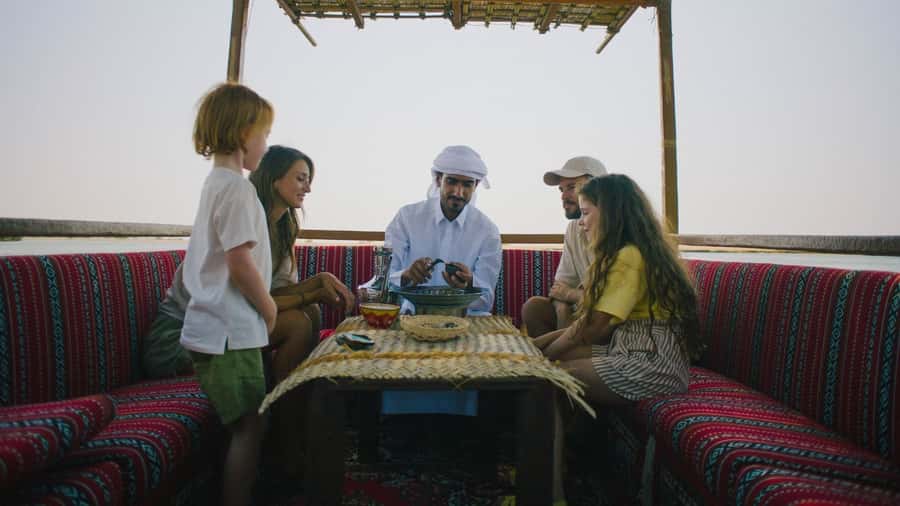
The farm’s atmosphere is relaxed. You can sit on carpets, drink Arabic coffee or tea, and take in the setting without rushing from one display to the next. The experience is only two and a half hours, yet the boat journey, storytelling, science section, demonstration, refreshments, and browsing time give it a full shape.
Is the $57 price good value?
At $57 per person, this is not the cheapest short outing in Ras Al Khaimah. The price becomes easier to justify because it includes the boat journey, entrance fees, a live English or Arabic guide, the oyster opening, and refreshments.
You are paying for more than a quick farm visit. The boat ride and mangrove views create a sense of place, while the guide supplies the historical context that you would miss by simply looking at a pearl display. The refreshments are welcome, though lunch is extra.
The value is strongest if you care about UAE culture, traditional work, local history, or hands-on demonstrations. It is also a good choice for families because the boat ride and oyster opening break up the talk. For someone who only wants scenic views, the price may feel high, since the main focus is the pearling story.
Remember the possible extra cost. Finding a pearl is not guaranteed, and keeping one costs AED 450 plus 5 percent. You can decline and still receive the full tour.
Who should book this experience?
I would choose this tour if you want an activity with a clear connection to Ras Al Khaimah rather than a generic boat outing. It suits adults who enjoy local history, families looking for an educational activity, and anyone curious about how pearls form.
It also works well for visitors who prefer a gentle pace. The water is usually still, the ride is not described as physically demanding, and there is time to sit, listen, eat light snacks, and browse.
You should think twice if you dislike modest dress requirements, outdoor heat, insects, or simple facilities. Shorts, short skirts, sleeveless shirts, pets, baby strollers, and similar items are not allowed. Wear light, modest clothing, comfortable shoes, sunscreen, and insect repellent.
The activity is wheelchair accessible, but the route includes a boat and pontoon areas. If you have particular mobility needs, confirm the practical details with the provider before arrival.
Weather can also change the plan. The tour may be canceled at short notice because of sudden weather changes or other unforeseen circumstances. Keep this in mind if you are arranging a tightly packed day.
Should you book the House of Pearls tour?
Book it if you want to understand an important part of UAE life through stories, objects, science, and a real oyster opening. The strongest reason to go is the guide. Taqi, Obaid, Bilal, and Othman Alblooshi have all been singled out for clear, engaging explanations, and the quality of the storytelling can make the history memorable for both adults and children.
The boat ride, mangroves, Arabic refreshments, and modest solar-powered farm add local character. Just arrange your own transport to Al Rams Marina, dress modestly, and remember that lunch and any pearl purchase cost extra.
For a cultural half-day in Ras Al Khaimah, this is a well-priced and distinctive choice. For a visitor seeking only a luxury cruise or a polished museum, it may not be the right fit.
FAQ
How long does the House of Pearls tour last?
The tour lasts 2.5 hours, including the boat trip, guided explanations, oyster presentation, and time at the House of Pearls.
Where does the tour begin?
It begins at Suwaidi Pearls, with the boat departing from Al Rams Marina, the old fishermen’s village.
Is transportation to Al Rams Marina included?
No. Transportation is not included, so you need to make your own way to the meeting point.
What does the $57 price include?
The price includes entrance fees, the guided experience, the traditional boat ride, a live oyster opening, water, soft drinks, dates, traditional Arabic tea, coffee, and light snacks.
Is lunch included?
No. Lunch is not included, though optional snacks or lunch may be available at the House of Pearls.
Can I keep a pearl if one is found?
Yes. If a pearl is found during the oyster opening, you can take it for AED 450 plus 5 percent. Oysters and pearls are not included in the tour price.
What languages are available?
The tour is available in English and Arabic, with a live guide.
What should I wear and bring?
Wear comfortable, modest clothing and comfortable shoes. Bring sunscreen, insect repellent, and a passport or ID card. Shorts, short skirts, sleeveless shirts, pets, and baby strollers are not allowed.
Just added around Ras Al Khaimah
- Ras al-Khaimah: Jais Sky Tour Zipline Adventure★ 4.7 · 36 reviews
- Ras Al Khaimah: Scenic Microlight Adventure Over Desert★ 4.9 · 14 reviews
- Ras al Khaimah: Jais Flight – World’s Longest Zipline Ticket★ 4.8 · 110 reviews
- Ras Al Khaimah: Half-Day Desert Safari with Dinner★ 4.4 · 95 reviews
- From Ras al Khaimah: Musandam Khasab Day Trip with Transfer★ 4.7 · 34 reviews
- Ras Al Khaimah: Guided Quad Bike Tour★ 4.6 · 35 reviews
- Morning Desert Safari in Ras Al Khaimah★ 4.0 · 19 reviews
- Khasab: Private City Tour and Wadi Qadah★ 4.9 · 8 reviews
Ras Al Khaimah Tours, compared.



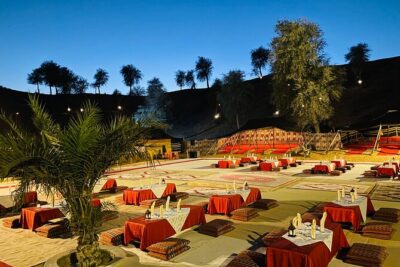
RAK Desert Safari and BBQ Dinner with RAK pick up
Read our review →


Private Desert Day Tour and Wadi Shawka Pool Visit
Read our review →
Browse the lists this tour appears in