
Reviewed · FOOD & DRINK
Dubai: Old Town, Street Food, Creek, Souks, & Emirati House
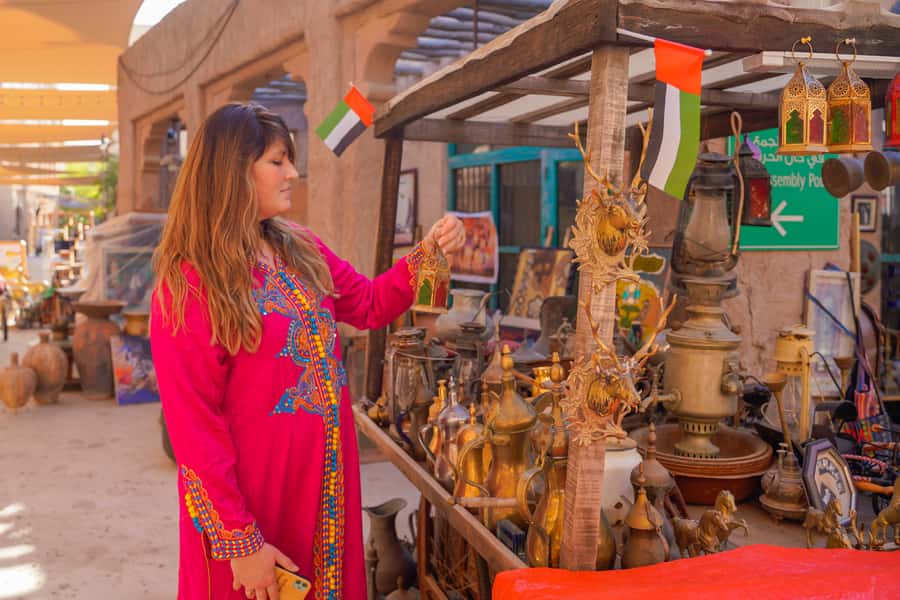
Old Dubai is where the city makes sense. This three-hour walk takes you from Al Fahidi’s old lanes to the Creek, then across by wooden abra to the Gold and Spice Souks. Along the way, you get dates, Arabic coffee, camel milk chocolate, and, if your booking includes the food option, samosas and Karak tea.
I like the way the tour connects daily life, food, and history instead of treating Old Dubai as a collection of photo stops. I also like the low price: at $6, the included drinks, snacks, heritage entries, and boat ride make this an unusually strong value.
The main catch is pace. You cover many places in three hours, and much of the experience is outdoors on foot. Children under five, infants, wheelchair users, and anyone carrying large luggage should choose another activity.
Key points to know before you book
- The route crosses Dubai Creek by abra, giving you a short but memorable ride between Bur Dubai and Deira.
- Food is part of the cultural lesson, with dates, Arabic coffee or tea, camel milk chocolate, and optional samosas with Karak tea.
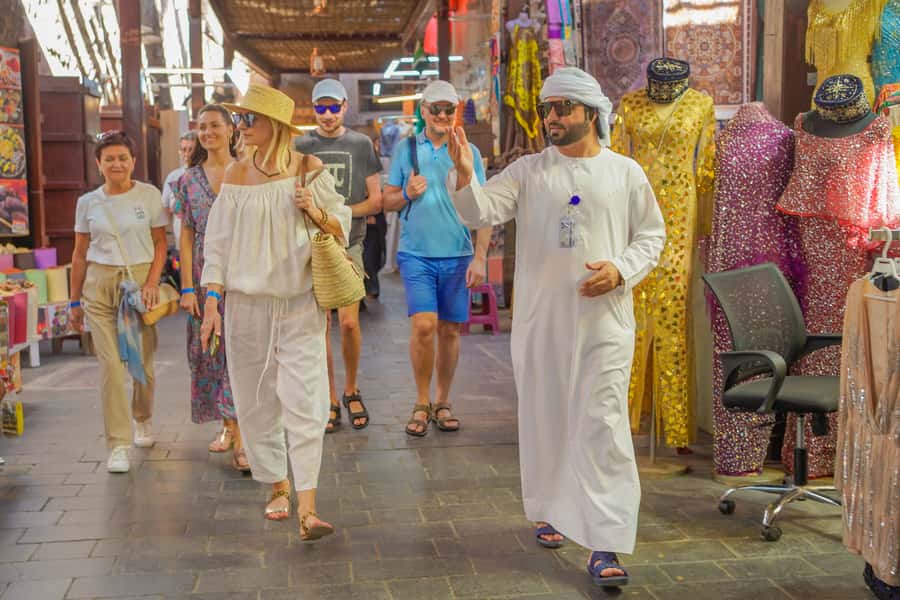
- The guide makes the difference, and guides including Khan, Fesal, Ahmed, Nasser, Mustafa, and Iqbal are praised for clear explanations and friendly help.
- The tour covers Old Dubai’s main sights quickly, including Al Fahidi Fort, Al Seef, the old wall, Bur Dubai Souk, the Spice Souk, and the Gold Souk.
- The final stop is the Gold Souk, so you can continue shopping after the guided portion ends.
- The Dubai Museum is temporarily closed, but the fort and other heritage sites remain part of the walk.
Why this short Old Dubai walk works
Dubai is often presented through glass towers, shopping malls, and grand hotels. This tour points you toward the older city, where the Creek still acts as a working divide between Bur Dubai and Deira, and where narrow lanes, courtyards, markets, boats, and tea stalls offer a different view of the emirate.
You meet at the entrance of Al Khayma Heritage Restaurant in the Al Fahidi Historical Neighborhood. That is a useful starting place because you begin among restored heritage buildings rather than spending the first part of the tour finding the historic district.
The tour is led in English, German, Spanish, French, or Italian. The strongest part of the experience depends on the person holding the guidebook and microphone, so it is worth paying attention to the assigned guide when you book. Names praised for clear, engaging tours include Khan, Fesal, Ahmed, Nasser, Mustafa, Ibrahim, Iqbal, Hossam, and Noor.
The best guides do more than recite dates. They explain how Dubai changed, how people moved between the two sides of the Creek, and how older Emirati customs fit alongside modern city life. Khan, for example, is noted for useful advice in the souks, while Fesal is praised for making a compact tour easy to follow. Mustafa is especially appreciated for explaining both traditional and modern Emirati life.
More food tours in Dubai:
- Dubai: Old Town, Creek, Museums, Souks, & Street Food Tour
★ 4.8 · 10,816 reviews - Dubai: Old Town, Souks, Street Food, Guided Tour & Abra Ride
★ 4.9 · 7,170 reviews - Dubai: Old Town, Souks, Street Food, Guided Tour & Abra Ride
★ 5.0 · 1,664 reviews
Al Fahidi Fort and the first look at Dubai’s past
The first formal stop is Al Fahidi Fort, with about 15 minutes for a guided visit and sightseeing. It is a short stop, not a full museum session, so you should expect an introduction rather than a long historical lecture.
That limited time is sensible for a walking tour. The fort gives you a physical starting point for understanding Dubai before the skyscrapers, while the guide provides the context that the building alone cannot. Ask questions here if you want more detail about the city’s early development, because the tour moves on at a steady pace.
The Dubai Museum is temporarily closed, so do not book this expecting access to a full museum collection inside the fort. The fort visit still adds value, but the experience is mainly about seeing the setting and hearing the guide’s explanation.
Al Seef, the mosque, and the old city wall
From the fort, the route continues toward Al Seef. You spend about 15 minutes walking and sightseeing along the promenade, with views toward the Creek and a quaint mosque nearby.
Al Seef is a modern heritage-style area, so it is not the same as walking through an untouched old neighborhood. Its value is practical: it gives you an easy introduction to the Creek, attractive views, and a bridge between Dubai’s preserved past and its newer visitor areas.
The mosque is a photo stop and guided visit. Dress modestly, especially around religious sites, and keep the stop respectful. Your guide can explain the setting and local customs, while you get a chance to pause and take pictures.
The old wall is another brief stop, with time for photos and a little free exploration. These short visits can feel quick if you want detailed architecture, but they work well for first-time visitors who want several snapshots of Old Dubai in one outing.
Bur Dubai Souk and the first taste of local food
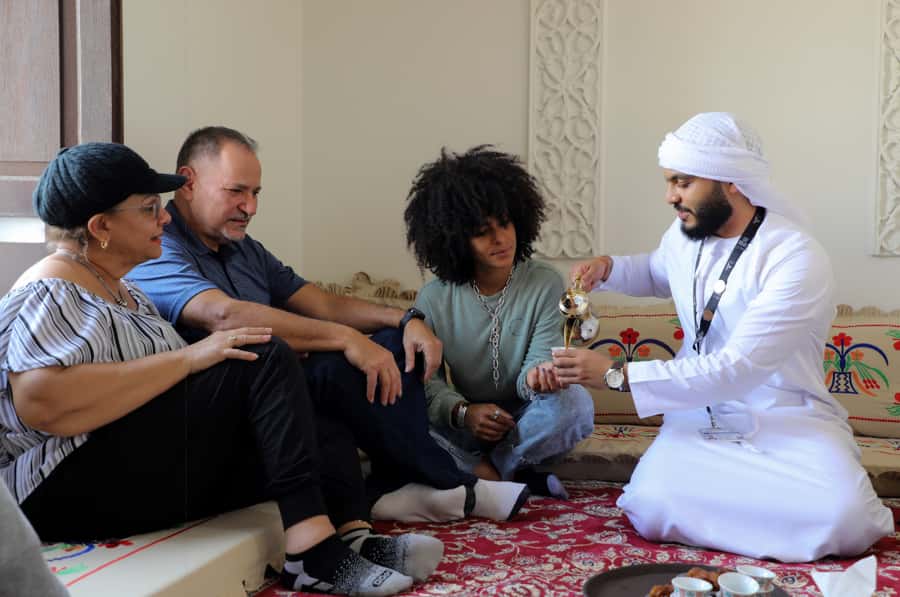
The Bur Dubai Souk is where the tour becomes more sensory. You have around 30 minutes for walking, shopping, photos, and food tasting, depending on the option selected when booking.
The food portion is simple but useful. Karak tea is a sweet, milky tea popular across the region, and samosas offer a familiar introduction to local street food. Dates, Arabic tea or coffee, camel milk chocolate, and other sweets may also be included as part of the experience.
I like this approach because food gives you something concrete to remember. A guide can explain culture for hours, but tasting Karak tea while walking through the old market helps connect the story to the place.
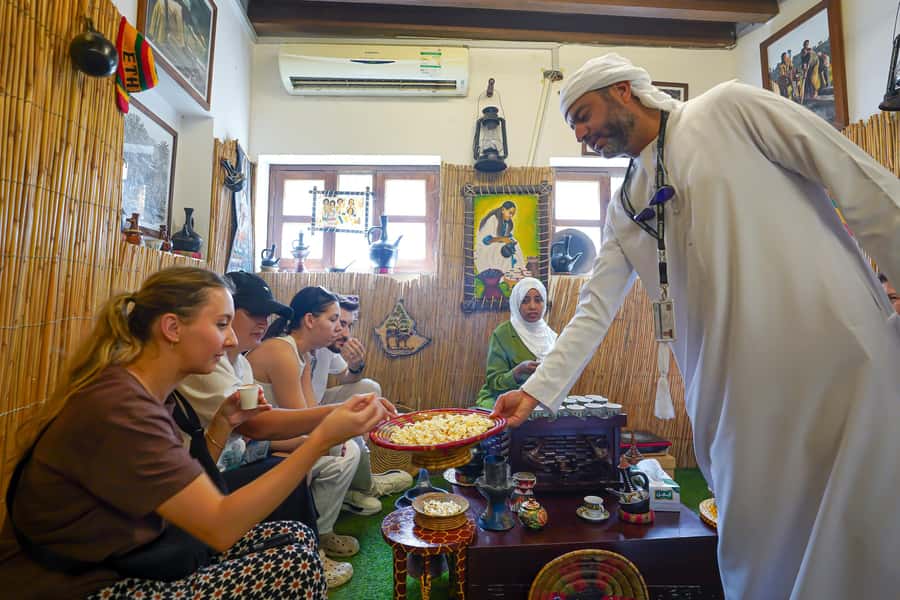
Some visitors have especially enjoyed Arabic coffee, different types of dates, and doughnuts with date syrup. Those treats are not all listed as guaranteed items for every booking, so consider them possible additions rather than promised parts of the basic package.
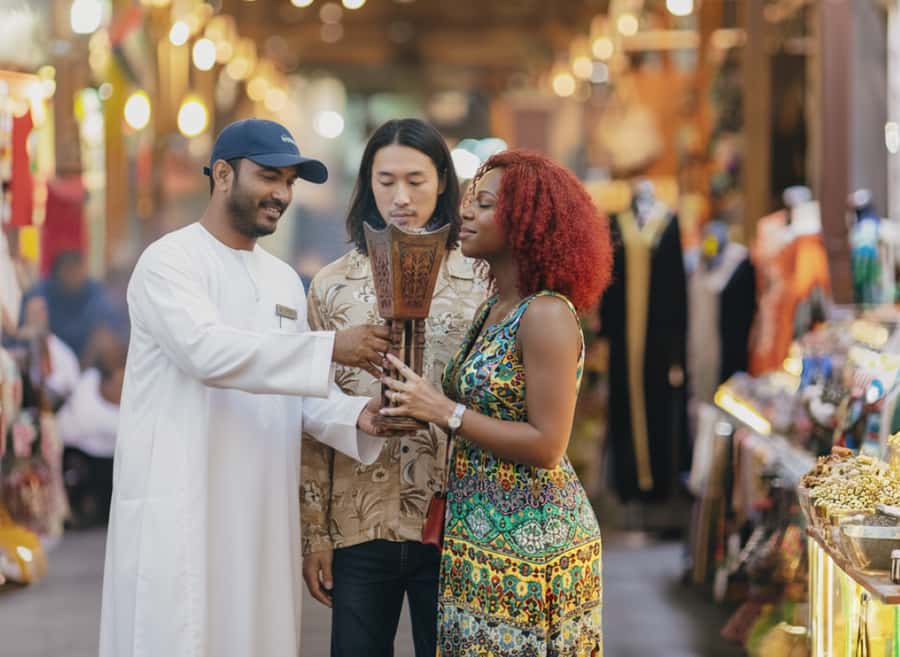
The souk is also your first real chance to shop. You may see textiles, souvenirs, spices, and other goods, but the exact selection can vary. Your guide can help you understand the setting and may offer practical advice when you begin bargaining.
Do not feel pressured to buy. The tour gives you time to look, but shopping is optional. If you do bargain, stay polite and decide your price before you start. Guides such as Mustafa and Iqbal have been praised for helping with souk shopping and offering useful tips.
Same base, a completely different kind of day:
- Dubai: Burj Khalifa Levels 124 & 125 Entry Ticket + Options
★ 4.3 · 90,891 reviews - Dubai: Desert Safari, Quad Bike, Camel Ride & Al Khayma Camp
★ 4.9 · 68,962 reviews - Dubai: Desert Safari, Quad Bike, Camel Ride and Sandboarding
★ 4.9 · 43,505 reviews - Dubai: Safari, Quad Bike, Camel Ride, and Buffet Dinner
★ 4.9 · 33,424 reviews
Crossing the Creek by traditional abra
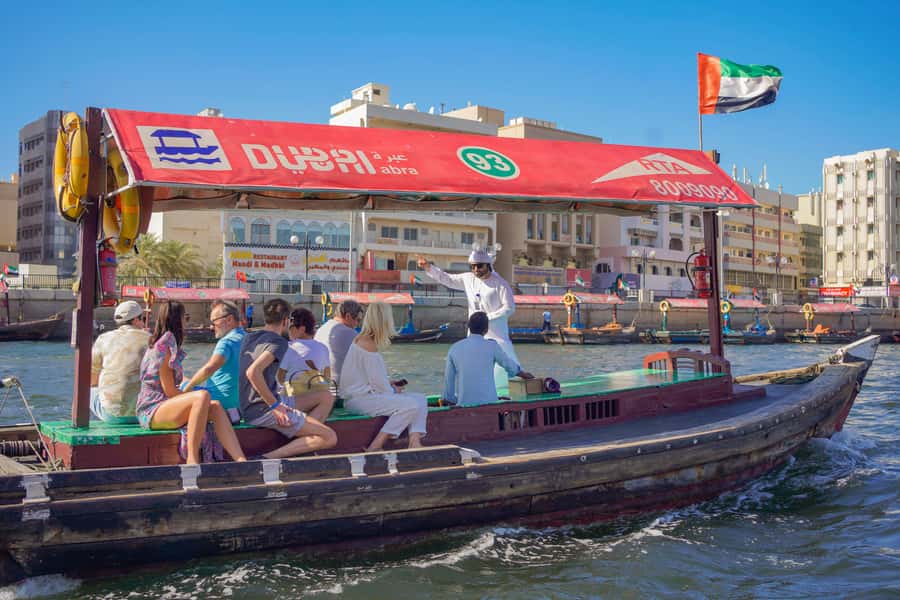
At Bur Dubai Abra Dock, you pause for about 15 minutes before taking the traditional boat across Dubai Creek. This is one of the most appealing parts of the experience because it changes the tour from a walking route into a small piece of local transport.
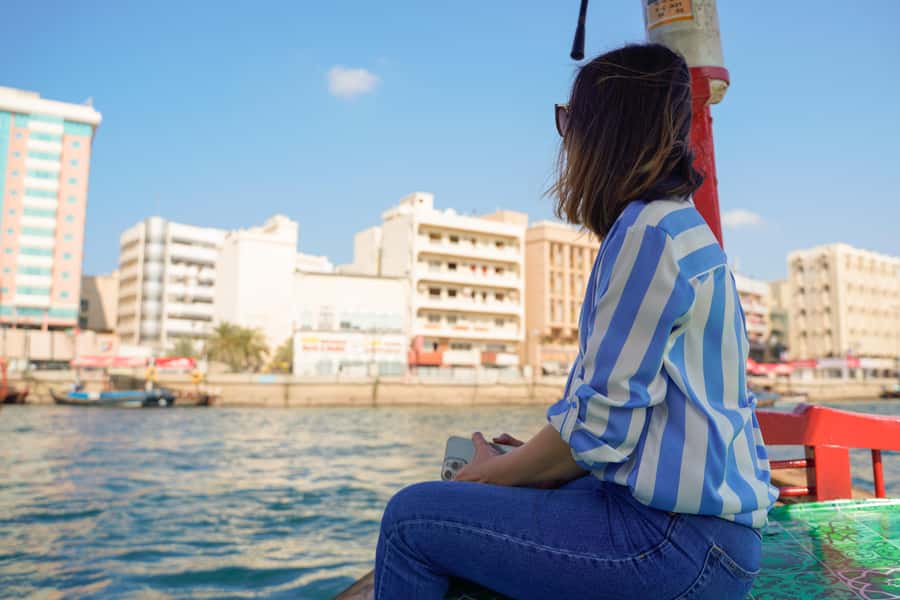
An abra is an open wooden boat used to cross the Creek. The ride is short, but the views give you a fresh angle on the waterfront, old buildings, and moving boats. You also get a practical sense of how the two halves of historic Dubai connect.
The boat can be busy, and this is not a private cruise. Think of it as a local crossing with scenic views, not a long sightseeing voyage. That is part of its charm. You are using a traditional form of transport rather than simply looking at one in a display.
The guide is useful here because the crossing may feel unfamiliar if you have not used the abra before. Several tour descriptions point to the guide making the boat connection easy, especially for people who would not have arranged it alone.
The Spice Souk: scents, color, and shopping advice
After crossing the Creek, the route reaches the Dubai Spice Souk. You get around 30 minutes for a guided visit, photos, walking, and shopping.
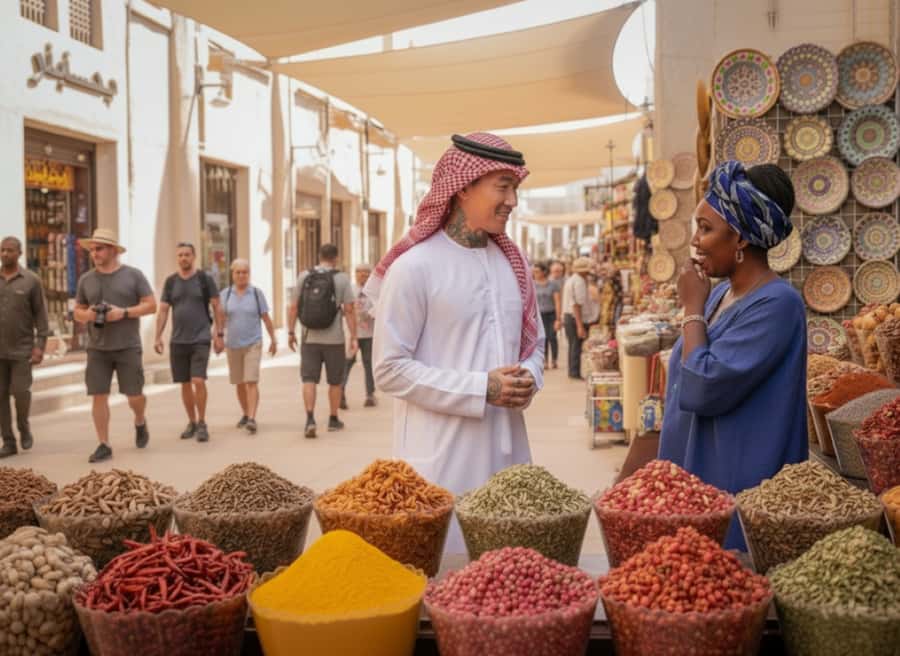
This is the most atmospheric market stop. The spice displays bring strong smells and bright colors, while shopkeepers may explain products and invite you to look more closely. You might find spice blends, dried goods, teas, and gifts, but you should compare prices and check what you are buying before paying.
The guide’s role matters here. A good explanation can turn a row of sacks into a lesson about cooking, trade, and everyday life. The best guides also help you avoid feeling lost in the sales talk.
This is a good place to ask about tea and spices, subjects that guides have used particularly well on the tour. You do not need to buy anything to enjoy the stop, and you should allow time to simply smell and observe the market.
The 30-minute allowance gives you more breathing room than the shorter fort and wall stops. Still, it is not enough for a long shopping session. If you are serious about buying spices, return after the tour ends or plan to spend extra time in the area.
The Gold Souk and the end of the walk
The final stop is the Dubai Gold Souk, with about 15 minutes for sightseeing, photos, walking, and shopping. The tour ends here rather than returning you to Al Fahidi, so plan your next move from Deira.
The Gold Souk is worth seeing even if you have no interest in buying jewelry. The shop windows and displays show the scale and importance of the gold trade in Dubai, while the guide can explain how to approach the market.
Fifteen minutes is enough for an introduction, but it is short for comparing jewelry or negotiating a purchase. If you want to shop, treat the guided portion as an orientation and stay in the area afterward.
Because the tour finishes at the Gold Souk, this route works well if you want to continue exploring Deira. It is less convenient if you need to return immediately to a hotel on the Bur Dubai side.
What the $6 price really includes
At $6 per person, the tour is priced more like a low-cost orientation than a premium cultural excursion. Yet the package includes several items that would otherwise add up: a guide, heritage and museum-site entry, the abra ride, Arabic tea or coffee, dates, camel milk chocolate, a bottle of water, and entry to an Emirati heritage house.
The Karak tea and samosas are included only if you select the relevant food option. Check that detail carefully during booking. Even without that option, the drinks, dates, chocolate, heritage visits, and boat crossing make the base price strong value.
The main value is not the number of inclusions. It is the way the tour removes friction. You do not need to work out the route between Al Fahidi, the Bur Dubai markets, the abra dock, and the Deira souks on your own. A guide also gives you cultural context at places that might otherwise look like attractive but disconnected stops.
At the same time, keep your expectations in line with the price. This is a group walking tour, not a private custom route. The three-hour schedule is compact, and the time at each sight is controlled by the group.
The Emirati heritage house and local hospitality
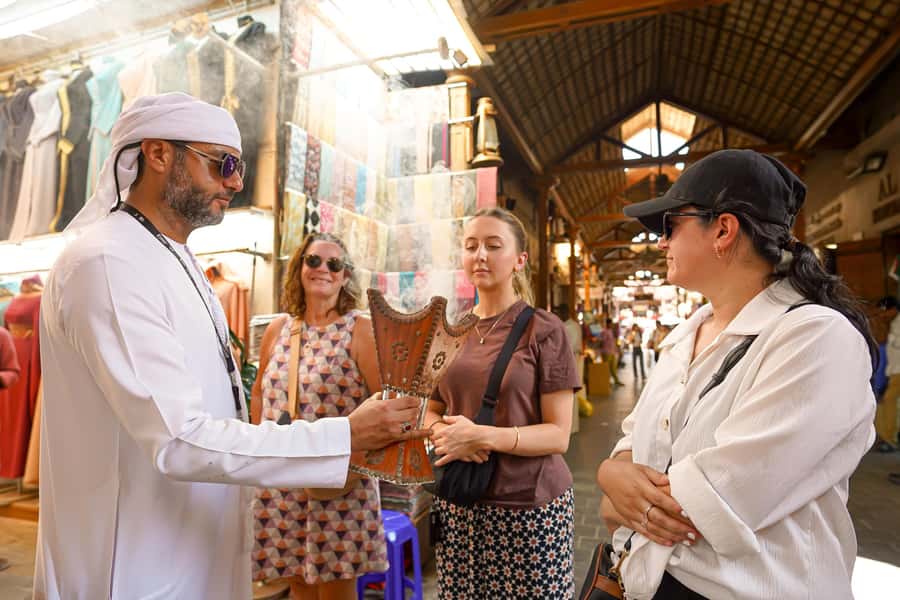
The Emirati heritage house is one of the most worthwhile stops because it adds a personal side to the city’s past. You enter a traditional home setting and receive dates, tea, and Arabic coffee as part of the hospitality.
This stop helps explain customs that are easy to miss when you focus only on buildings and markets. Dates and coffee are not just refreshments here. They are part of the welcome, and your guide can explain their place in Emirati social life.
The visit also gives you an indoor pause during a warm day. The tour includes plenty of walking, so a short heritage-house stop can make the three-hour route feel more manageable.
You should not expect a full-length home visit with unlimited time. It is one section of a tightly planned walk. Still, it gives the tour a more human feel than a route built only around forts, markets, and photo stops.
Pace, heat, and practical comfort
The tour lasts three hours and combines walking, standing, food tasting, shopping, and a boat ride. Several stops offer shade or indoor air conditioning, but the route remains outdoors for much of the time.
Book an early or later starting time if you have a choice and want to limit the harshest heat. Wear comfortable shoes, bring sun protection, and carry only what you need. Large bags and luggage are not allowed, and pets are not permitted.
The tour is not recommended for infants or children under five. It is also unsuitable for wheelchair users, because the route includes walking through markets and boarding a traditional abra.
One useful point from the experience is the guide’s attention to comfort. Khan is praised for providing shade stops and air-conditioned breaks, which mattered to a pregnant participant. That does not guarantee the same pacing with every guide, but it shows why speaking up about your needs at the start is sensible.
The meeting point is at Al Khayma Heritage Restaurant in Al Fahidi Historical Neighborhood. The location is described as easy to find and close to a metro station, though you should still allow time to reach the entrance before the start.
Who will get the most from this tour
I would choose this tour for a first visit to Dubai, especially if your schedule is tight and you have already seen the newer parts of the city. It gives you a useful first look at the old neighborhoods without requiring a full day.
It also suits solo visitors. The route has a clear meeting point, a guide throughout, and several stops where you can ask questions or get help with the souks. One solo participant felt well looked after, which is reassuring if you are exploring Dubai alone.
Families with older children may enjoy the boat ride, snacks, and markets, but the walking and heat may test younger children. Children under five are specifically not suitable for the tour.
You should look elsewhere if your priority is a long museum visit, a private guide, extensive jewelry shopping, or a slow architectural study. The Dubai Museum is closed, and the schedule favors variety over depth.
Should you book the Old Dubai tour?
Book it if you want a low-cost introduction to Dubai before the skyscrapers. The mix is unusually complete for three hours: Al Fahidi, Al Seef, a mosque, the old wall, a souk, an Emirati home, coffee and dates, an abra crossing, and the Spice and Gold Souks.
The tour is strongest when your guide adds stories and answers questions. Guides such as Khan, Fesal, Ahmed, Mustafa, Nasser, and Iqbal have earned particular praise for clear explanations, humor, patience, and shopping advice.
Skip it if you dislike group pacing or cannot manage a mostly walking route. For everyone else, the $6 cost makes this an easy choice, especially when you select the food option and want a quick but useful introduction to Old Dubai.
FAQ
How long does the Dubai Old Town tour last?
The tour lasts three hours. It includes walking, sightseeing, food tasting, an Emirati heritage-house visit, and an abra ride.
Where does the tour start?
Meet your guide at the entrance of Al Khayma Heritage Restaurant in the Al Fahidi Historical Neighborhood of Dubai.
Where does the tour end?
The guided experience ends at the Dubai Gold Souk in Deira.
Is the abra ride included?
Yes. A traditional abra ride across Dubai Creek is included in the activity.
Are food and drinks included?
Arabic tea or coffee, dates, camel milk chocolate, and a bottle of water are included. Karak tea and samosas are included if you select the relevant food option when booking.
Is the Dubai Museum open during the tour?
No. The Dubai Museum is temporarily closed. The tour still includes a visit to Al Fahidi Fort and other heritage sites.
Which languages are available?
Live guides are available in English, German, Spanish, French, and Italian.
Just added around Dubai
- Abu Dhabi City Tour with Ferrari Park★ 5.0 · 15 reviews
- Abu Dhabi City Tour with Ferrari world Full Day★ 4.5 · 11 reviews
- Abu Dhabi City Tour with Ferrari World Tickets★ 5.0 · 16 reviews
- Abu Dhabi City Tour with Buffet Lunch★ 4.5 · 17 reviews
- Abu Dhabi City Tour with Private Car★ 5.0 · 11 reviews
- Abu Dhabi City Tour in a 4×4 Shared Vehicle★ 5.0 · 41 reviews
- Abu Dhabi City Tour with Desert Safari Adventure★ 5.0 · 8 reviews
- Exclusive Full-Day Abu Dhabi City Tour with Sheikh Zayed Mosque★ 5.0 · 38 reviews
Food & Drink, compared.
Old Town, Creek, Museums, Souks, & Street Food Tour
Read our review →
Old Town, Souks, Street Food, Guided Tour & Abra Ride
Read our review →Old Town, Souks, Street Food, Guided Tour & Abra Ride
Read our review →
Old Dubai tour: Local Market, Tasting, Dubai creek with Abra ride
Read our review →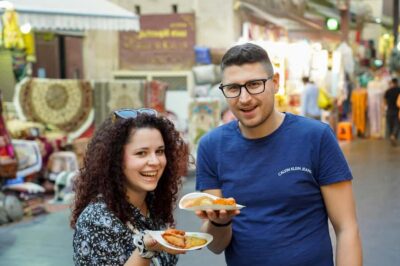
Old Dubai: Premium Guided Tour with Street Food & Abra Ride
Read our review →
Dubai Top Highlights: Frame Entry, Souks, Abra & Street Food
Read our review →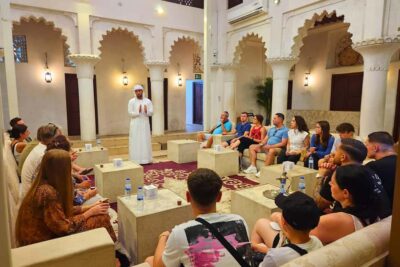
Premium Old Town, Street Food, Souks & Boat Ride Tour
Read our review →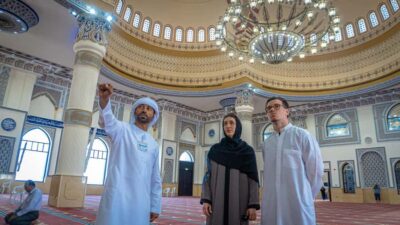
City Highlights Tour with Blue Mosque & Street Food
Read our review →Browse the lists this tour appears in